
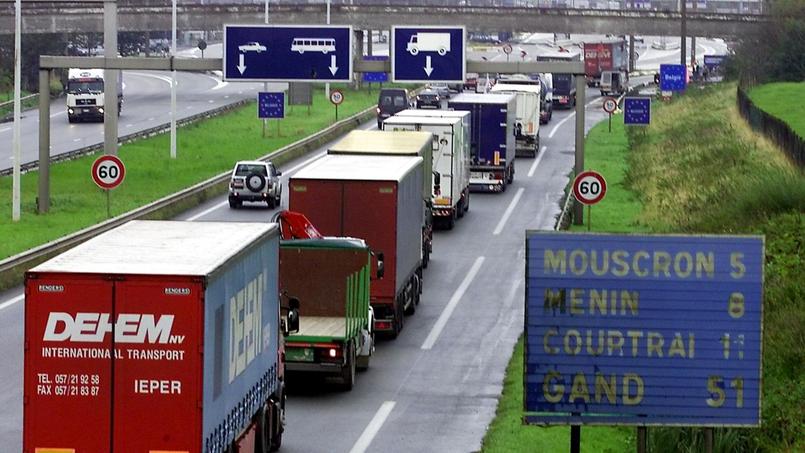
France, with its central geographic position in Europe and its extensive infrastructure network, stands as an indispensable logistical power for the continent. Freight transport, the true backbone of its economy, is a complex and multimodal system resting on three main pillars: the road network, one of the densest in Europe; the railway, with extensive coverage but underutilized for freight; and a river network that connects key ports like Le Havre and Marseille with the heart of the continent. This diversity should be its greatest strength, but in practice, it faces a crossroads of challenges that test its resilience and sustainability.
The first and most visible dilemma is the overwhelming dependence on road transport, which accounts for about 85% of land freight. This truck hegemony generates unsustainable pressure on the road network, causing chronic congestion on key corridors such as those around Paris, Lyon, or Lille. Furthermore, this model, intensive in CO2 emissions, clashes head-on with the country’s and the European Union’s ambitious environmental goals, creating constant tension between immediate logistical efficiency and the imperative need for an ecological transition.
Faced with this, freight rail appears as the logical solution, but it faces its own dead end. Despite having a high-speed network and quality infrastructure, “rail freight” moves only a modest percentage of the total, around 10%. The reasons are profound: a network prioritized for high-speed passenger traffic, high operating costs, and a chronic lack of investment in cross-country links and intermodal terminals, which hinders an efficient and cost- and time-competitive door-to-door service.
The environmental issue is, without a doubt, the transversal dilemma that permeates all others. Regulatory pressure, with carbon taxes and the future ban on the sale of diesel trucks, is forcing a technological revolution towards electric and hydrogen trucks, solutions still under development and with a prohibitive cost for many transport SMEs. This transition, necessary but costly, threatens to suffocate a sector composed of numerous family-run businesses operating on very tight margins.
To these structural challenges are added recurrent social tensions. The transport sector is historically sensitive to protest movements, as demonstrated by road blockades by truckers in response to rising fuel prices or in defense of their working conditions. These mobilizations, which can paralyze the country in a matter of hours, expose the vulnerability of a supply chain hyper-dependent on a road that can be cut with a few parked trucks. It is a stark reminder of the bargaining power of this guild and the fragility of the system.
Bureaucracy and regulatory fragmentation, both at the national and European levels, constitute another obstacle. Differences in regulations, weight and size limits for trucks between countries, and administrative complexity at customs – even after Brexit, which has complicated flows with the United Kingdom – slow down transit and add additional costs. In a single market, the persistence of these invisible barriers is a drag on the competitiveness of French companies.
In conclusion, the freight transport system in France is navigating turbulent waters, caught between the inertia of a century-old model dominated by roads and the urgent need to evolve towards multimodal, digitalized, and green logistics. Its future depends on the ability of successive governments, companies, and social agents to unlock the potential of rail and waterways, manage a just energy transition, and shield supply chains from social conflict. The challenge is not only to keep France’s commercial arteries open but to reinvent them for the demands of the 21st century.
Have any thoughts?
Share your reaction or leave a quick response — we’d love to hear what you think!
-
 0
0
-
 0
0
-
 0
0
-
 0
0
-
 0
0
