
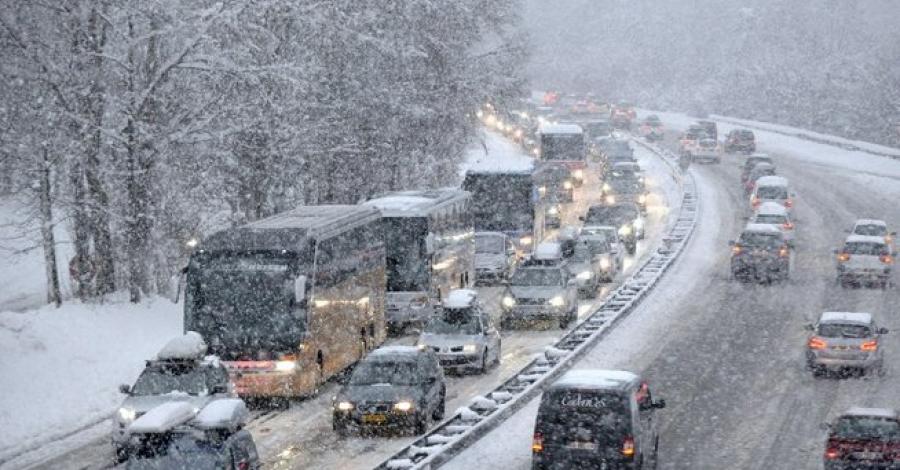
With the arrival of the first cold fronts and the prospect of a potentially especially harsh winter, Spanish authorities have activated a special operation to control road freight transport.
The General Directorate of Traffic (DGT), in coordination with the Ministry of Transport, has intensified inspections since October on major logistics corridors and mountain passes.
The objective is clear: to prevent accidents and avoid the collapse of roads in the face of adverse weather conditions. These more frequent and stricter controls focus on verifying that trucks are equipped with mandatory winter equipment, primarily chains or winter tires.
The most significant control element is the verification of anti-skid equipment. Unlike other countries where winter tires are mandatory, in Spain the law requires carrying chains or equivalent alternative systems to travel on roads where their use is obligatory.
Checkpoints set up at the approaches to mountain passes such as León, Somosierra, or Navacerrada meticulously check that drivers are carrying this equipment and know how to fit it. Fines aside, non-compliant trucks are diverted, a measure aimed at preventing a stranded vehicle from paralyzing a crucial logistics artery.
However, the campaign goes beyond chains. Inspectors from the General Directorate of Transport and the Tax Agency carry out simultaneous checks on driving and rest times, cargo weight, and the vehicle’s technical condition. Driver fatigue is a risk factor that is exacerbated by poor visibility and cold. Likewise, special attention is paid to the correct condition of brakes, tires (with sufficient tread), and lighting systems, all of which are critical for safe driving on ice or fog.
The Spanish logistics sector faces this deployment with the added pressure of maintaining supply chains in the pre-Christmas period. Transport associations, while acknowledging the need for safety, are asking authorities for extremely clear and real-time communication on road conditions and restrictions. In parallel, they have launched internal awareness campaigns for their drivers to take extra precautions, plan routes in advance, and check their vehicles before setting out.
Overall, Spain’s strategy for this winter of 2025 is based on proactive prevention. The harsh experiences of past winters, with trucks trapped for days in snowy mountain passes, have driven this approach.
The authorities’ message is clear: road safety is non-negotiable. Although these rigorous controls may cause minor delays, they are presented as a lesser evil compared to the chaos that a serious accident or the blockage of a route fundamental to the national economy could generate. The success of the campaign will ultimately be measured by the accident rate on the roads in the coming months.
Have any thoughts?
Share your reaction or leave a quick response — we’d love to hear what you think!
-
 0
0
-
 0
0
-
 0
0
-
 0
0
-
 0
0
