
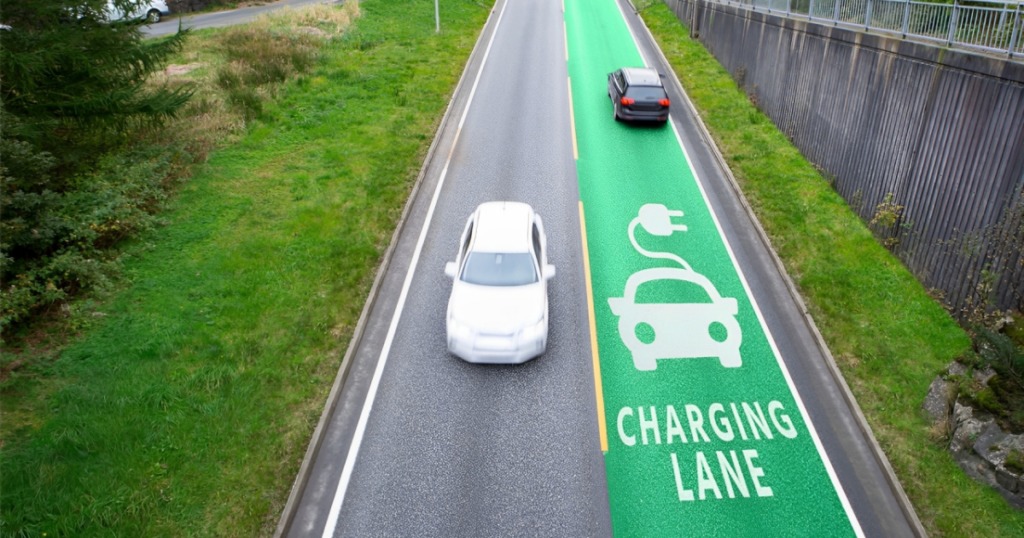
As the world accelerates towards the electrification of transport, one challenge persists like a ghost on the road: range anxiety and endless waits at chargers. Norway, a country that already leads by a wide margin in the adoption of zero-emission vehicles, has not only heard the problem but has responded with a solution that blurs the line between the road and energy infrastructure. It has inaugurated the first roadway that charges electric vehicles in motion, a breakthrough that transforms the very asphalt into a continuous, invisible charger.
The magic of this feat is pure precision engineering. The system is based on the principle of electromagnetic induction. Strategically buried copper coils under the bitumen create a magnetic field that, when intercepted by a receiver on the vehicle, induces an electric current that flows directly to the battery. The efficiency is around a remarkable 90%, silencing skeptics and positioning this technology not as a supplement, but as a real and more comfortable alternative to conventional plugs.
But all this innovation would rest on fragile foundations if the energy used were not equally clean. This is where the Norwegian model achieves its maximum coherence. The electricity pulsing through the coils does not come from fossil fuels, but from the country’s vast hydroelectric network, generated by the force of its fjords and waterfalls. This marriage between cutting-edge infrastructure and a 100% renewable energy matrix closes the loop on truly sustainable mobility.
This advance is the strategic accelerator for Norway’s ambitious goal of eliminating combustion vehicles by 2025. By eradicating the main Achilles’ heel of the electric car—range anxiety—dynamic charging removes the last psychological barrier for consumers. Norway is no longer just subsidizing the purchase; it is building an ecosystem where the green option is, simply, the easiest and most practical.
The global projection of this project is monumental. If this technology is replicated on the main highways of Europe and America, it would forever transform the transport of goods and passengers. Imagining long-haul trucks that recharge as they roll, or family trips without a single technical stop, is no longer a utopia. It represents the first step towards an electrified road network that would make internal combustion engines obsolete.
With this road, Norway has not just laid a stretch of smart asphalt; it has laid the foundation stone of a new paradigm. It demonstrates that the future of mobility does not lie solely in improving what we carry inside the car, but in reinventing what lies beneath its wheels. The message is clear and powerful: the next transport revolution will not be under the hood, but under the pavement, and it will be powered by nature.
Have any thoughts?
Share your reaction or leave a quick response — we’d love to hear what you think!
-
 0
0
-
 0
0
-
 0
0
-
 0
0
-
 0
0
