
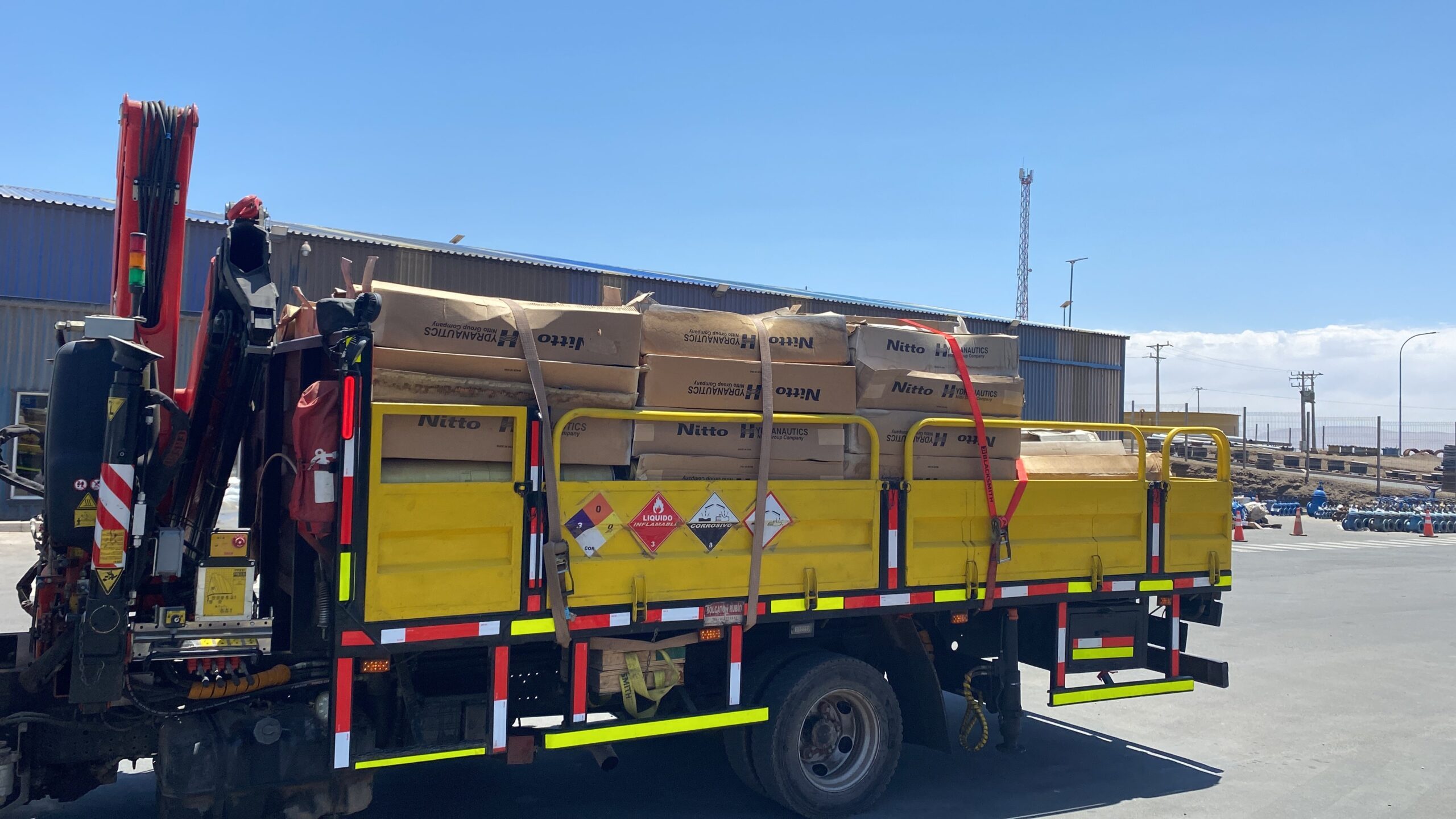
On the logistical arteries of Spain, through which over 500 million tons of goods circulate annually, a silent but crucial battle is being fought. The growing sophistication of organized crime, taking advantage of stops in remote areas or service stations, has made cargo security a national priority. Every theft is not just an economic loss for the carrier but a blow to the supply chain that affects consumers and businesses. In this scenario, technological innovation has emerged as the most reliable shield to armor the trailers that keep commerce alive.
The first line of defense is no longer simple locks. The sector is migrating towards intelligent locking devices that offer much more than a physical barrier. Electronic locks with GPS and geofencing create a virtual perimeter around the vehicle, alerting in real time if the door is opened in an unauthorized location. These digital guardians not only deter but provide irrefutable evidence of when and where an access attempt occurred, transforming security from a static concept to a dynamic and connected one.
Alongside these locks, the humble security seals have undergone their own revolution. Far from basic plastic seals, there are now tamper-proof seals with unique, non-transferable codes and radio frequency technology (RFID) that allow for automated reading at control points. This evolution is critical for sectors like pharmaceuticals or food, where cargo integrity is as important as its arrival at the destination. A broken seal is the undeniable proof of tampering, a silent witness that can determine the validity of an insurance claim.
However, technology alone is not enough. Effective security is an ecosystem that integrates hardware, software, and human capital. Specific training for drivers on safe parking protocols, close collaboration with State Law Enforcement Agencies, and the implementation of standards like the Security Certificate for Transport (CST) are equally vital pieces. The union of awareness, cooperation, and innovation creates a protection network much more robust than any isolated device.
The future of logistics in Spain depends directly on winning this battle. Investment in advanced security systems has ceased to be an optional expense to become a strategic pillar. Ensuring that every trailer reaches its destination without incident is not just a matter of profitability but of trust and competitiveness in a global market. In short, securing the cargo is, now more than ever, securing the very future of the sector.
Have any thoughts?
Share your reaction or leave a quick response — we’d love to hear what you think!
-
 0
0
-
 0
0
-
 0
0
-
 0
0
-
 0
0
