
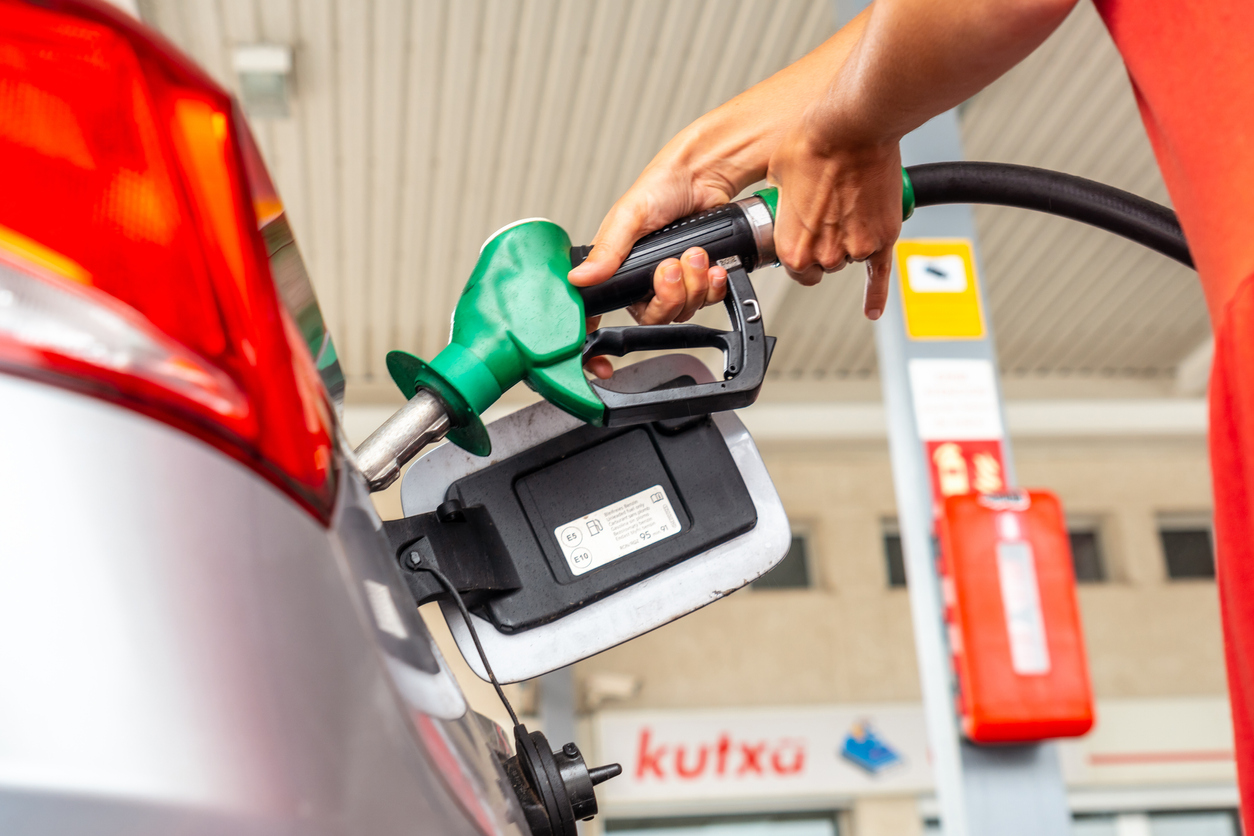
The escalation of tensions in the Middle East has once again cast its shadow over the wallets of Spanish drivers. As we have been able to verify after consulting various digital news sources in the country, the start of this week has brought with it a new and significant increase in fuel prices, dangerously bringing the price of a liter of diesel close to the two-euro mark at many service stations. This new surge, driven by the military conflict involving Iran, breaks the trend of moderation and returns citizens to the unease of an uncontrolled spiral, recalling the toughest moments of the energy crisis experienced in recent years.
Far from being a uniform figure, the cost of refueling varies drastically depending on the territory. According to data collected this Tuesday, March 10, 2026, cities on the Mediterranean arc and the central area show the highest maximum prices. For example, while in Ceuta diesel is at a striking single price of €1.499, in Valencia the same fuel can reach up to €2.225 per liter. In the case of 95-octane gasoline, cities like Barcelona and Zaragoza record the highest ceilings, exceeding €1.90 in some places, a disparity that reflects logistics, competition, and, above all, the uncertainty of the international market.
To find a similar episode of tension at the pumps, we must go back to 2022, when the invasion of Ukraine triggered a major energy crisis. On that occasion, the price of 95-octane gasoline reached an all-time high in July, exceeding €2.14 per liter, while diesel crossed the same barrier. This price hike, caused by Europe’s dependence on Russian gas and oil, left a deep mark on household economies and put sectors such as transport, logistics, and agriculture in check, whose operating costs skyrocketed to unsustainable levels.
The impact of this new increase is not limited to the individual driver going to the gas station. The rise in fuel prices acts as a powerful inflationary catalyst, making the transport of goods more expensive and, therefore, the final cost of everyday consumer products. This chain effect threatens to cool the economic recovery, reduce families’ savings capacity, and put pressure back on professional drivers, for whom fuel accounts for more than 30% of their operating expenses, generating a climate of great concern in the sector.
Faced with this worrying scenario, which evokes the toughest moments of the 2022 crisis, the Government faces the challenge of containing the blow without burning the bridges of direct intervention. Although the star response back then was a blanket subsidy of 20 cents per liter, assumed by the State and oil companies, along with multi-million dollar aid for transport and public transport discounts, the current situation is different. The fiscal margin for maneuver is smaller, but the lesson learned is clear: geopolitical volatility requires agile solutions and a social shield prepared to protect the most vulnerable from an energy bill that, unfortunately, has never been so unpredictable.
Have any thoughts?
Share your reaction or leave a quick response — we’d love to hear what you think!
-
 0
0
-
 0
0
-
 0
0
-
 0
0
-
 0
0
