
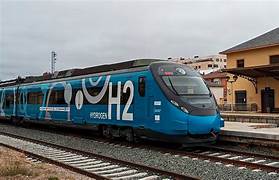
The utopia of a train that only emits water vapor is now a reality on three continents. What began as a technical experiment in Germany has become a global race to decarbonize the railway. From the Alpine mountains of Italy to the California desert, passing through the vast Russian rail network, the year 2026 is shaping up to be the year in which green hydrogen ceases to be a promise and becomes a tangible alternative to diesel, especially on those lines where electrification with catenary wires is unfeasible.
The origin of this transformation dates back to 2018, when the French manufacturer Alstom put the first Coradia iLint trains into service in Lower Saxony, Germany. Those trains, powered by Cummins hydrogen fuel cells, demonstrated that it was possible to travel more than 100 kilometers with zero emissions, using the same infrastructure as the aging diesel trains. This milestone laid the technological foundations for the projects we see maturing today. The principle is always the same: a fuel cell combines hydrogen with oxygen to generate the electricity that powers the engines, a chemical process whose only residue is water, turning these convoys into silent, environmentally friendly giants.
Europe maintains its leadership and in 2026 is witnessing the consolidation of strategic projects. A clear example is Italy, where this year the first hydrogen trains are entering service in the Alpine region of Valcamonica. The transport company FNM has acquired 14 Coradia Stream trains to replace old diesel units on a 68-mile route. The decision is not coincidental: electrifying this mountainous stretch would have cost almost $500 million, an investment far greater than the commitment to hydrogen, which will also be produced on-site using electrolyzers powered by renewable energy. This self-production model could be the key to reducing the costs of a fuel that, for now, remains the Achilles’ heel of the technology.
Meanwhile, Spain, although with a lower profile, is accumulating kilometers of experience thanks to the FCH2RAIL project. The prototype, a bimodal hybrid train capable of alternating between catenary and hydrogen, has already surpassed 10,000 kilometers of testing on Adif’s networks, proving its worth in a country with a high percentage of electrified tracks but where strategic “niches” still need decarbonizing, such as rural lines or port shunting operations. Companies like Talgo are already working on the next step: bringing hydrogen technology to high speed, a challenge that requires power unprecedented in this type of train.
The qualitative leap of 2026 is not only measured in Europe. The United States has premiered its first hydrogen passenger train, the ZEMU, which has been operating since September 2025 on the Arrow line, connecting Redlands with San Bernardino, California. With an investment of $23 million per unit, this train not only improves the quality of the journey but also integrates into the region’s strict climate plans, demonstrating that the technology is also viable in the competitive North American market. Far from there, Asia is accelerating at two different speeds: while India boasts of having developed the world’s most powerful hydrogen engine (1200 HP), which will begin tests on the Jind-Sonipat route, Russia began assembling its first hydrogen train in March 2026 at the Demikhovsky plant, adapted to its 1520 mm track gauge and destined to run on the island of Sakhalin.
Despite the optimism, the path of hydrogen is not without challenges. Its energy efficiency (from well to wheel) is much lower than that of direct electrification, and the cost of green hydrogen remains high, hovering around $16 per mile in the Italian case, a figure that is only justified if massive investment in catenary is avoided. However, the trend is clear. The combination of hybrid technologies (battery + hydrogen), regenerative braking, and the expected cost reduction of electrolyzers are paving the way. The year 2026 will be remembered as the moment when the hydrogen train ceased to be a technical rarity and became a key piece of the global railway puzzle, demonstrating that the future of public transport is not only electric but also, to a large extent, gaseous and clean.
Have any thoughts?
Share your reaction or leave a quick response — we’d love to hear what you think!
-
 0
0
-
 0
0
-
 0
0
-
 0
0
-
 0
0
