
The military escalation in the Middle East unleashes panic in energy markets and threatens a new price crisis in Europe
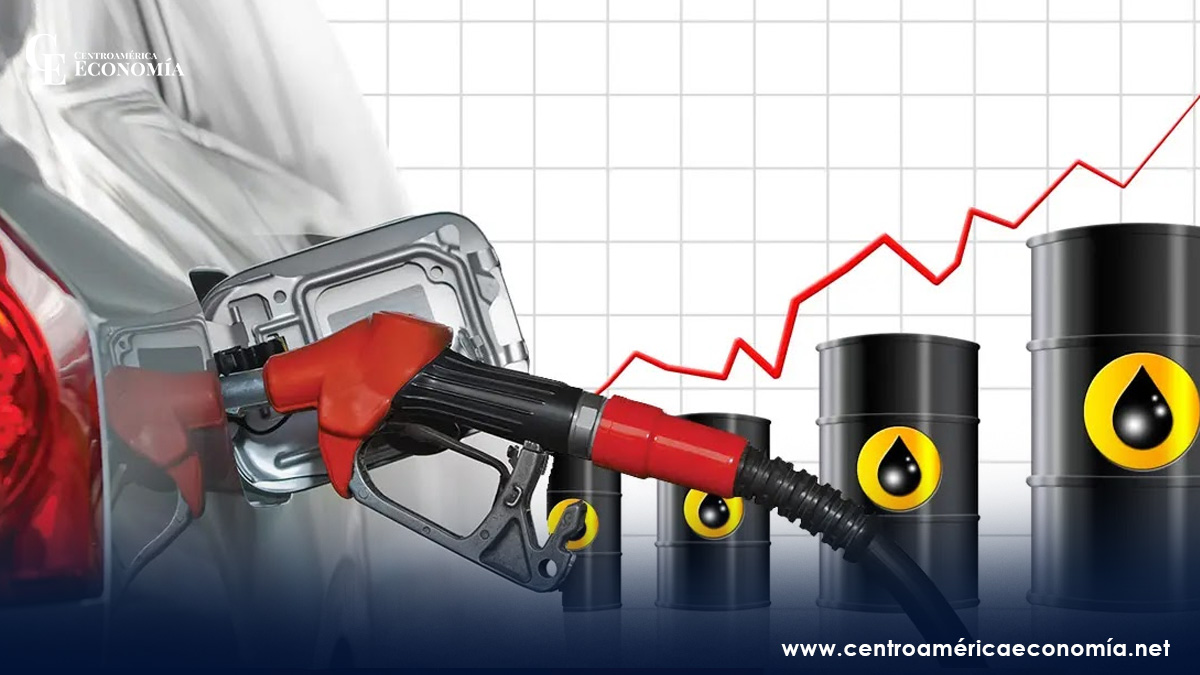
What many Spanish drivers already suspected when filling up their tanks these days has a clear explanation and a name: the Strait of Hormuz. Gasoline and diesel have begun to become more expensive at Spanish service stations as a direct consequence of the military escalation in the Middle East, where the attack by the United States and Israel on Iran has shattered the calm of energy markets.
According to data compiled by Bloomberg, the price of Brent crude oil, the benchmark in Europe, has risen more than 7% in just 48 hours, exceeding $78 per barrel, while natural gas has soared more than 40% amid fears that the conflict will interrupt supply from Qatar, one of the world’s main producers.
The Organization of Consumers and Users (OCU) has already issued a clear warning: in the next two weeks, the price of fuels could increase between eight and ten cents per liter. “We have not yet seen the real impact of this crisis at the pumps, because oil price increases take one to two weeks to be passed on to citizens’ pockets,” sources from the organization explain to RTVE Noticias. For now, the average liter of gasoline is already around 1.48 euros and diesel 1.43, but experts fear this is only the beginning if the situation is not resolved quickly.
The Strait of Hormuz, the Energy Artery that Has Europe on Edge
To understand what is happening, one must look at the Persian Gulf, specifically the Strait of Hormuz, a narrow maritime passage between Oman and Iran through which no less than a fifth of the world’s oil flows. There, Iranian drone attacks have paralyzed key facilities: the Saudi Ras Tanura refinery, one of the largest on the planet, and the Qatari port terminal of Ras Laffan, from where liquefied natural gas is exported. Qatar has stopped its production for safety reasons and shipping companies have frozen their operations in the area.
“The Strait of Hormuz is a critical point geopolitically and geoeconomically,” explains international economic analyst Cristina Peña in statements to this media outlet. “80% of what comes out of there goes to Asia, to China, Japan, or India, but if Chinese industry suffers, all European supply chains come after it.” This is what economists call a domino effect: even if the oil doesn’t come directly to Spain, its price is set in a global market, and any scare in production or transport ends up reaching consumers around half the world.
The Electricity and Gas Bill, the Next Concern
But gasoline won’t be the only thing going up. Natural gas, of which Spain is a large consumer both for heating and for generating electricity in combined cycle plants, has experienced its second-largest price increase in history, surpassed only by the day of the Russian invasion of Ukraine. The TTF contract traded in the Netherlands, the European benchmark, has soared 40.8% and continued to rise this Tuesday, exceeding 63 euros per megawatt hour, according to data from Bloomberg.
This will have direct consequences for Spanish households. Javier Martínez, Energy spokesperson for Kelisto, warns in statements to RTVE Noticias that those on the regulated electricity tariff (PVPC) could see their bill increase by up to 50% if the strait closure lasts two weeks, going from an average of 47 euros per month to 64 euros. In the case of natural gas, the Last Resort Tariff (TUR) could even double in the April revision, although industry sources suggest the Government could intervene as it did in 2022 to limit increases.
“There’s no need to panic, but we must stay alert,” clarifies Raúl Suárez, CEO of Nedgia (Naturgy’s gas distributor), in statements to Radio Nacional. “Gas supply to Spain is very diversified geographically, but markets are global and ultimately tensions are passed on to prices.” Suárez recalls that we are coming from low levels, much cheaper than during the Ukraine crisis, but acknowledges that uncertainty is at its peak.
How Far Can the Escalation Go?
International financial analysts have been crunching numbers and considering scenarios for days. The big question is how long the conflict will last and whether the Strait of Hormuz will remain blocked. Investment bank Goldman Sachs calculates that the price of gas in Europe could double if the closure lasts a month. ING goes further with oil: it estimates that Brent could strengthen “towards $100 per barrel and, ultimately, $140 in the worst-case scenario.”
However, not all scenarios are catastrophic. Jorge León, head of geopolitical analysis at Rystad Energy, points out to EL PAÍS that, in the absence of signs of de-escalation, the most likely range is $85 to $90 per barrel. For their part, experts at Citigroup believe that the Iranian leadership could back down or that the United States will choose to de-escalate so as not to harm the economy in an election year. “Our base case is that the operation will last approximately one week,” point out those at the German asset manager DWS.
Beyond Fuel: The Fear of a Widespread Economic Crisis
The ghost haunting the offices of Brussels and European chancelleries these days is not just the price of gasoline. Behind this energy crisis lurks the risk of a new inflationary spiral that ends up infecting the entire economy. If transport becomes more expensive, everything becomes more expensive: food, manufactured products, construction materials. And if Chinese industry, a major consumer of Gulf oil, sees its production affected, European supply chains, dependent on Asian components, will suffer new tensions.
“It’s not just what we pay at the pump, it’s what we’ll pay in the supermarket in a few weeks,” summarizes Peña. The economist insists that this crisis once again highlights the fragility of Europe’s energy dependence. “We need to reinforce strategic autonomy, but that can’t be fixed in two days. In the meantime, we are subject to what happens thousands of kilometers away.” For now, citizens can only watch with concern as the price displays at gas stations, which seemed to have stabilized a few months ago, start climbing again, with no one quite knowing where they will stop.
Have any thoughts?
Share your reaction or leave a quick response — we’d love to hear what you think!
-
 0
0
-
 0
0
-
 0
0
-
 0
0
-
 0
0
