
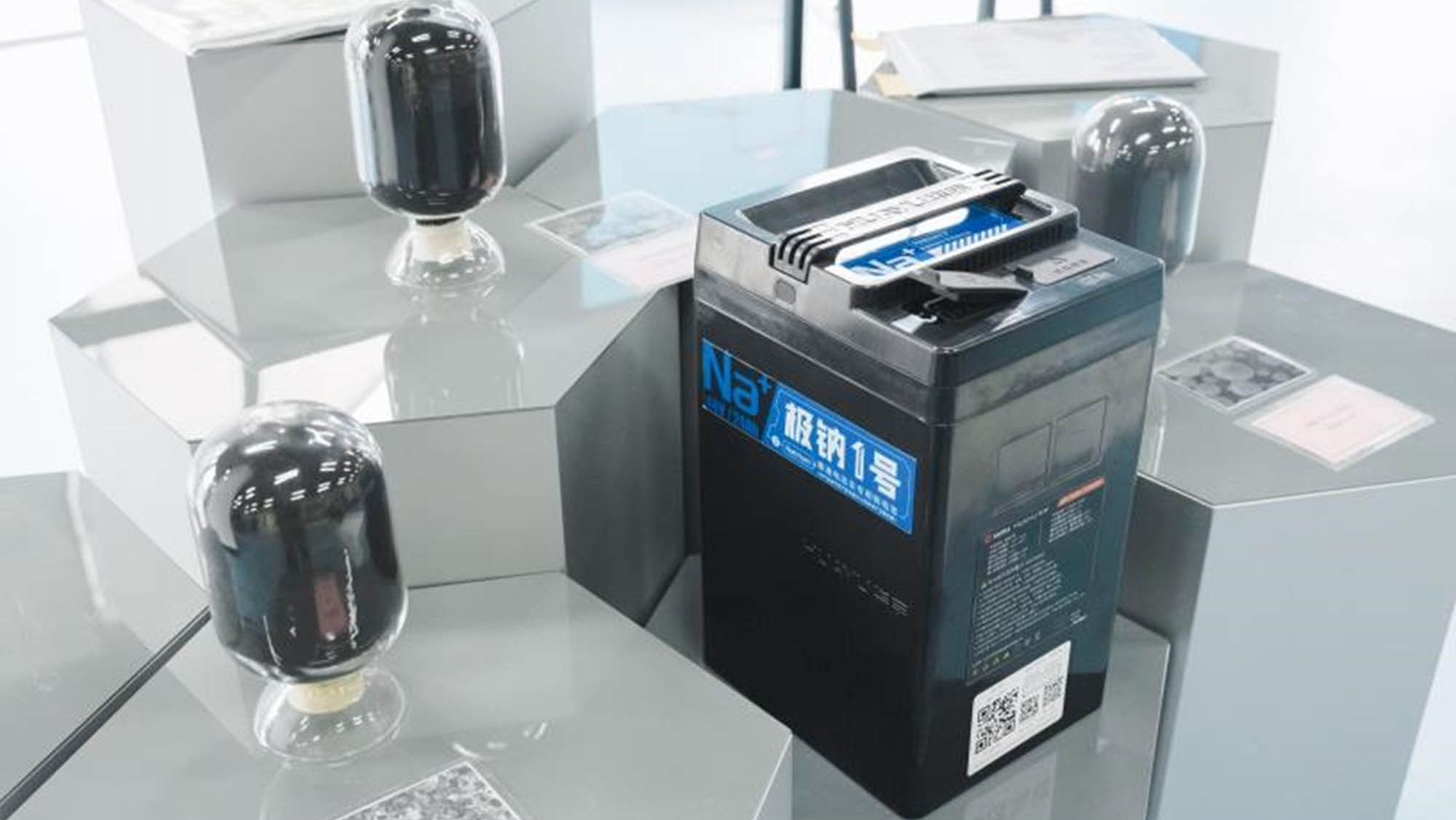
In the race to dominate energy storage, there was one material that for decades remained in lithium’s shadow, waiting for its moment.
The story of sodium-ion batteries does not begin now, or even in the 21st century, but in the laboratories of the 1970s, when the first researchers began to explore the possibilities of this abundant and economical element.
It was in 1978 when scientists first documented the intercalation of sodium ions in materials like TiS₂, laying the groundwork for what decades later would become a true energy revolution.
However, as so often happens in science, the path twisted: lithium, lighter and with higher energy density, stole the spotlight.
During the eighties and nineties, while lithium-ion batteries first conquered portable electronics and then the collective imagination, research on sodium was relegated to a secondary academic plane.
There were attempts, like the first “rocking-chair battery” with sodium in the early eighties, and even a significant milestone in 1993 when a functional prototype with a disordered carbon anode was demonstrated. But the world was looking elsewhere. The industry needed small, powerful devices for cameras, computers, and phones, and lithium fulfilled that role perfectly. Sodium, heavier and bulkier, seemed doomed to be a mere laboratory curiosity.
We had to wait until the turn of the decade, specifically 2011, for someone to decide to bet on it seriously.
That year, Faradion was born in the United Kingdom, the first company in the world dedicated exclusively to the commercial development of sodium-ion batteries. The move seemed risky, even premature, but it responded to a concern that was beginning to germinate among experts: lithium is not infinite, its extraction is polluting, and its price depends on geopolitical tensions in regions like South America or Australia. Sodium, on the other hand, is in every glass of seawater. The idea was too good to ignore.
But the first steps were hesitant. One of the major technical challenges these pioneers faced was the low efficiency during the first charge cycle, a critical process that occurs during battery manufacturing. While lithium comfortably exceeded 90% initial efficiency, the first sodium prototypes had much more modest figures, sometimes below 20%. This meant a substantial part of the capacity was lost before even starting to use the battery. Researchers around the world, such as those from the Federal Institute for Materials Research and Testing (BAM) in Germany, began working on solutions, achieving notable advances like raising that efficiency from 18% to 82% through novel anode designs.
Despite the difficulties, the sodium bug had already bitten the industry. Towards the end of the 2010s, China became the stage where this technology began to take off.
Companies like HiNa Battery started manufacturing the first cells with real applications, and in 2021 they achieved a historic milestone: the commissioning of the first large-scale energy storage system with sodium batteries, a 1 MWh project that demonstrated the technology could leave the laboratory and face the real world. Shortly after, the giant CATL burst in with the announcement of its first commercial generation, giving a definitive boost to an alternative that until then many considered a minor promise.
Thus, amidst doubts and advances, failures and small victories, sodium-ion batteries built their own path. They did not intend to kill lithium, but to occupy the space that lithium could not cover. A story of scientific perseverance that, as we will see, is far from over. In fact, it had only just begun.
Have any thoughts?
Share your reaction or leave a quick response — we’d love to hear what you think!
-
 0
0
-
 0
0
-
 0
0
-
 0
0
-
 0
0
