
Imagine for a moment the Italy of the early twentieth century, a country awakening to the industrial revolution with dusty roads and an urgent need to connect its cities.
It was in Turin, the cradle of Italian motoring, where a visionary named Giovanni Ceirano decided that horses were no longer enough to move the cargo of a growing nation.
Thus, in 1905, Fabbrica Automobili Ceirano was born, and with it, the embryo of what would become a century-old tradition. But the true pioneer our grandparents would remember was the 1927 Ceirano 47 CM, a three-ton capacity mastodon that, with its 53-horsepower petrol engine, became the direct heir of those Fiat 18 BLs that had survived the trenches of the Great War.
It wasn’t just a truck: it was the promise that Italy could move on its own, carrying goods from the Alps to Sicily with a roar that announced a new era.
When we talk about Isotta Fraschini, the mind drifts to those luxurious limousines that carried royalty and movie stars. But what few drivers know is that this Milanese company, founded in 1900, also knew how to build what was needed for hard work.
In 1934, as Italy looked towards Africa with colonial ambitions, the Isotta Fraschini D80 was born. Imagine the scene: the same engineers who designed engines for cars worth a fortune, created a 95-horsepower truck with a 7.3-liter six-cylinder diesel, fitted with a cab commissioned from none other than Zagato, the famous coachbuilder of sports cars.
It was a truck with aristocratic blood, but with a worker’s soul, and its importance was such that, after the war, it continued to be manufactured in Brazil, proving that good design and robustness know no borders or social classes.
If there is a name that makes the hearts of veteran haulers beat faster, it is OM, the Officine Meccaniche of Brescia. And within its history, there is a giant that deserves its own chapter: the Titano.
The year was 1937 when this colossus appeared on Italian roads with an 11.5-liter, 137-horsepower diesel engine, a true beast for its era. What made it special was not just its brute force, but the obsessive attention to detail: its seven-bearing crankshaft was an engineering feat that guaranteed a smoothness of operation never before seen in a cargo vehicle.
Those who had the honor of getting behind the wheel of a Titano knew they had in their hands the ultimate solution for the most demanding loads. Until the post-war Fiats arrived, this mastodon from Brescia was the undisputed king of the roads, transporting what no other dared to move.
Some vehicles are born marked by history, and the Lancia 3Ro is one of them. When in 1938 Vincenzo Lancia, a genius who had revolutionized the automobile with innovations like the monocoque chassis, put this heavy truck into production, he could not imagine that it would become the backbone of Italian military transport during World War II.
With its six-cylinder diesel engine and a 6.5-ton capacity, the 3Ro was so robust that soldiers nicknamed it “il cammello” (the camel) for its endurance in the sandy expanses of North Africa. But the most beautiful part of this story is what happened after: those trucks that survived the bombings and mines were stripped of their military uniforms and became the silent heroes of the reconstruction.
For years, civilian 3Ros carried bricks, beams, and hope throughout Italy, demonstrating that a truck’s true glory lies not in war, but in building peace.
The most experienced drivers will always remember the moment they first saw a Fiat 666. It was 1940, and suddenly, trucks no longer had that long front hood, transforming into something more modern: the forward cab, positioned right over the engine, offered unprecedented visibility and maneuverability. It was a revolution.
With its initial 95 horsepower and a total weight of up to 13.4 tons, the 666 was the result of the so-called “unification laws” that Mussolini had promoted to standardize production. But beyond politics, what mattered to drivers was its bomb-proof reliability — literally, as it also served in military versions.
When the war ended, the 666 became the backbone of the reconstruction: there was no rubble to remove or material to carry that this Fiat couldn’t handle. It was the workhorse of an Italy determined to rise from its ashes.
We now come to the heart of this story, the truck that any Italian hauler, from Sicily to the Alps, would recognize with a tear of nostalgia: the Fiat 682.
When it left the factory in 1952 with its 11-liter, 123-horsepower engine, no one could imagine that this vehicle would be manufactured for over thirty years. Its secret? A robustness so extraordinary that it seemed designed by gods rather than men.
The 682 was the faithful friend that never left its driver stranded, the companion that climbed mountain passes with the same ease as it crossed the sandy expanses of the Sahara. Because yes, dear friends, the 682 conquered the world: even today, in remote corners of Africa, it’s possible to see these veterans still circulating with dignity, fifty years after they were manufactured.
It’s not a truck, it’s a legend on wheels, the living testimony that when Italians do things well, they do them forever.
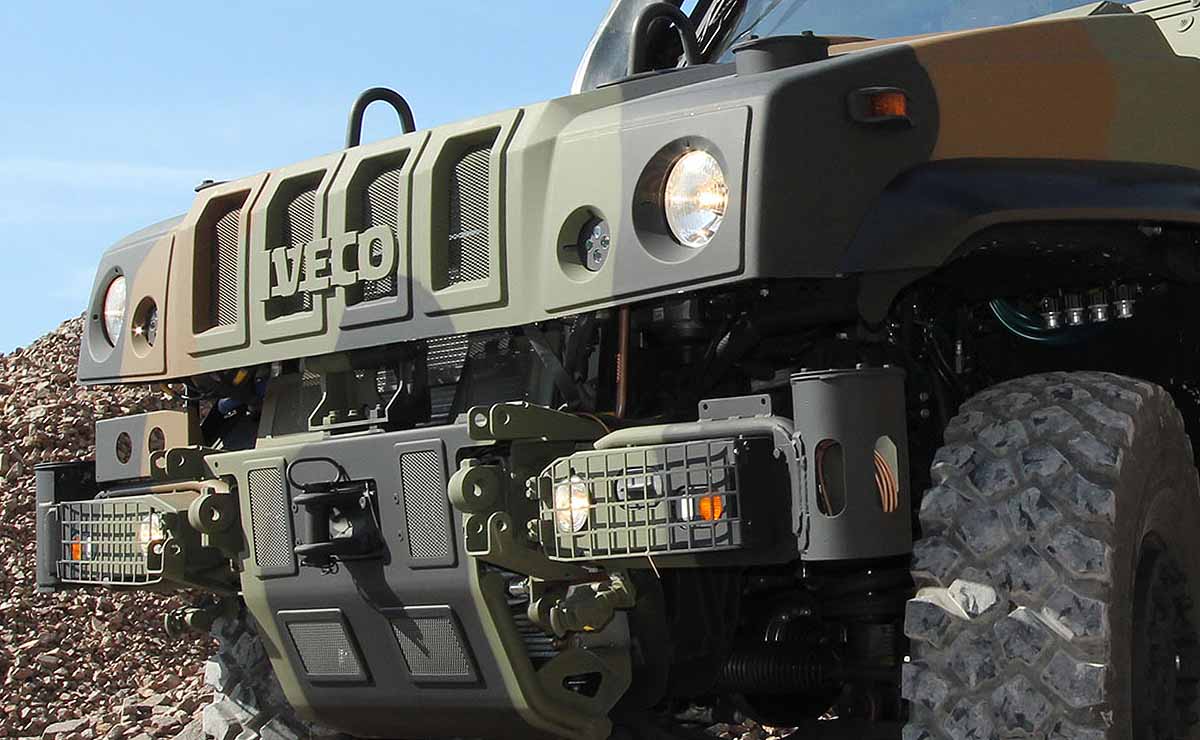
Today, when you get into a modern Iveco — the direct heir to this entire tradition — and travel along European motorways with the radio on and the climate-controlled cab, it’s worth remembering where we came from.
Behind every technological advancement, every euro of design, there is a story of pioneers who got their hands dirty in workshops in Turin, Milan, and Brescia.
From those Ceirano trucks that moved three tons with petrol engines, through the indestructible Lancia 3Ros that survived a war, to the mythical Fiat 682 that still looks at us today from some lost road in the world.
This story is not just about engines and bodies; it’s the story of Italy itself, of its ability to create beauty even in work objects, of its resilience to rise from the ruins, and of its pride in building vehicles that not only carry cargo but also carry the soul of a people.
So, next time you get behind the wheel, drivers, listen carefully to that roar: it’s the same one Italian truckers have been hearing for over a hundred years. The roar of the giants.
For you, drivers who know the smell of asphalt and the fatigue of long hauls, this story is also your story. Because without your steady hands on the wheel, these giants could never have told their legend.
Have any thoughts?
Share your reaction or leave a quick response — we’d love to hear what you think!
-
 0
0
-
 0
0
-
 0
0
-
 0
0
-
 0
0
