
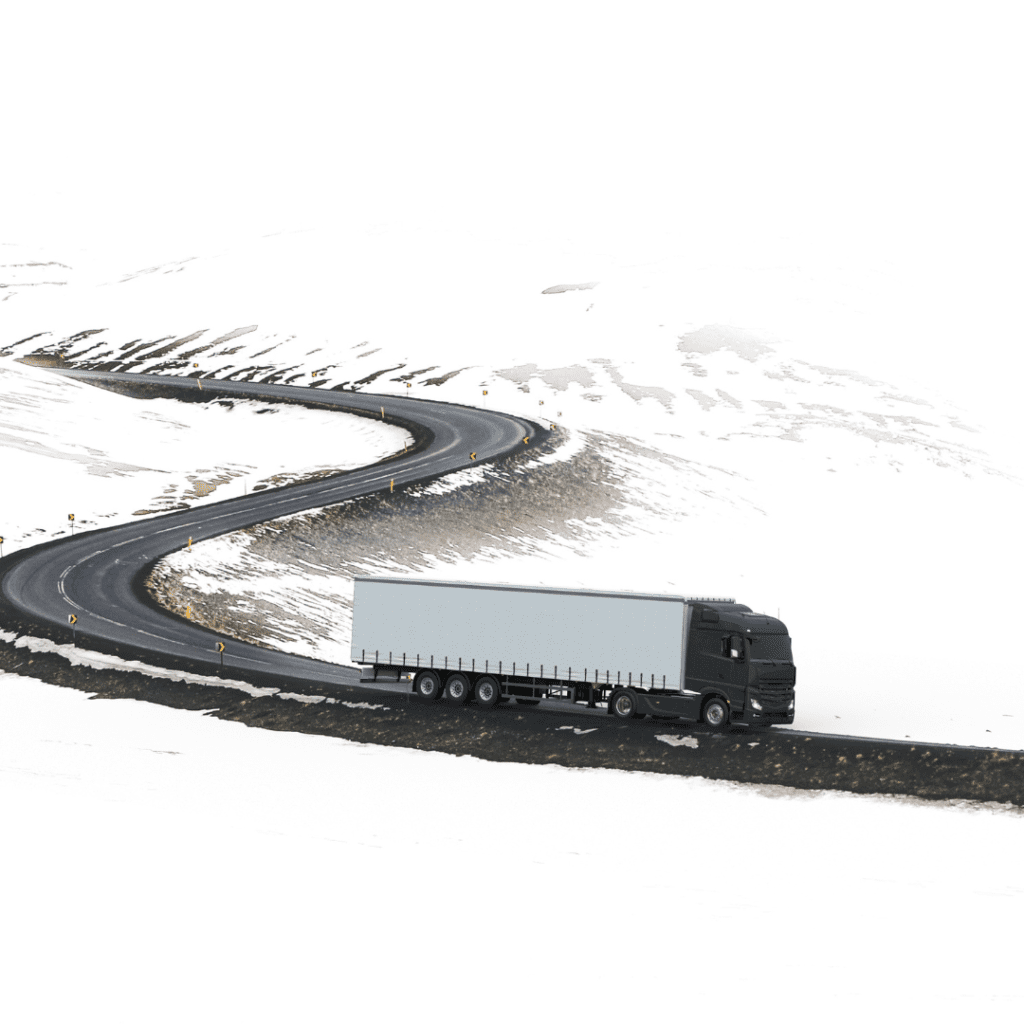
The arrival of winter and the successive storms battering the Iberian Peninsula radically transform the landscape of Spanish roads. For transport drivers, facing a territory as rugged as ours — with its vast plains, mountain passes, and steep gradients — poses an added challenge that tests both the driver’s skill and the vehicle’s mechanical condition. In this context, the braking system becomes the main ally for survival on the road, and its proper maintenance allows for no delays or half-measures.
Prevention begins long before the first snowflakes fall or the first raindrops. In heavy vehicles equipped with pneumatic systems, it is vital to check the air pressure and drain the tanks to eliminate any accumulation of moisture that, with sub-zero temperatures, could freeze and completely block the system. Likewise, checking the adjustment of brake shoes and pads, paying special attention to automatic slack adjusters, ensures that the brake response is adequate, without dangerous play or excessive friction that could cause overheating on long descents through passes like Pajares or Leitariegos.
When the asphalt is covered with water, ice, or snow, driving techniques must adapt radically. Increasing the safety distance to more than ten seconds from the vehicle ahead is not a recommendation but an imperative necessity in a country with roads as diverse as those connecting the Meseta Central with the peripheral mountain ranges. Braking gradually and smoothly, avoiding any abruptness, helps maintain control of the vehicle and prevents the wheels from locking, turning what could be a simple scare into an avoidable tragedy.
One of the most common mistakes among heavy vehicle drivers in winter is the overuse of the engine brake on slippery surfaces. Although this tool is useful in normal conditions, its excessive use on sheets of ice can cause loss of traction in the drive wheels and trigger a dangerous skid. In these circumstances, and especially in the mountainous stretches of Spanish geography, it is safer to use the service brake gently, metering the pressure and anticipating each curve.
Professionals behind the wheel must remain attentive to the signs that warn of system malfunction. Loss of braking power — known as fading —, strange noises when applying the pedal, or vibrations in the steering wheel are unequivocal indicators that something is not working correctly. Similarly, if the vehicle tends to pull to one side when braking, we are facing an imbalance that requires immediate mechanical intervention, because on wet or icy roads any imbalance can be fatal.
Ultimately, winter safety in heavy transport is not a matter of chance, but the combination of impeccable mechanics and prudent driving adapted to the circumstances. Faced with the demanding orography of the peninsula — with its contrasts between endless plains and treacherous mountain passes — the only valid recipe is prevention: check, anticipate, and act with the smoothness that a treacherous road surface demands. Winter does not forgive, and on the road, life does not understand haste.
Have any thoughts?
Share your reaction or leave a quick response — we’d love to hear what you think!
-
 0
0
-
 0
0
-
 0
0
-
 0
0
-
 0
0
