
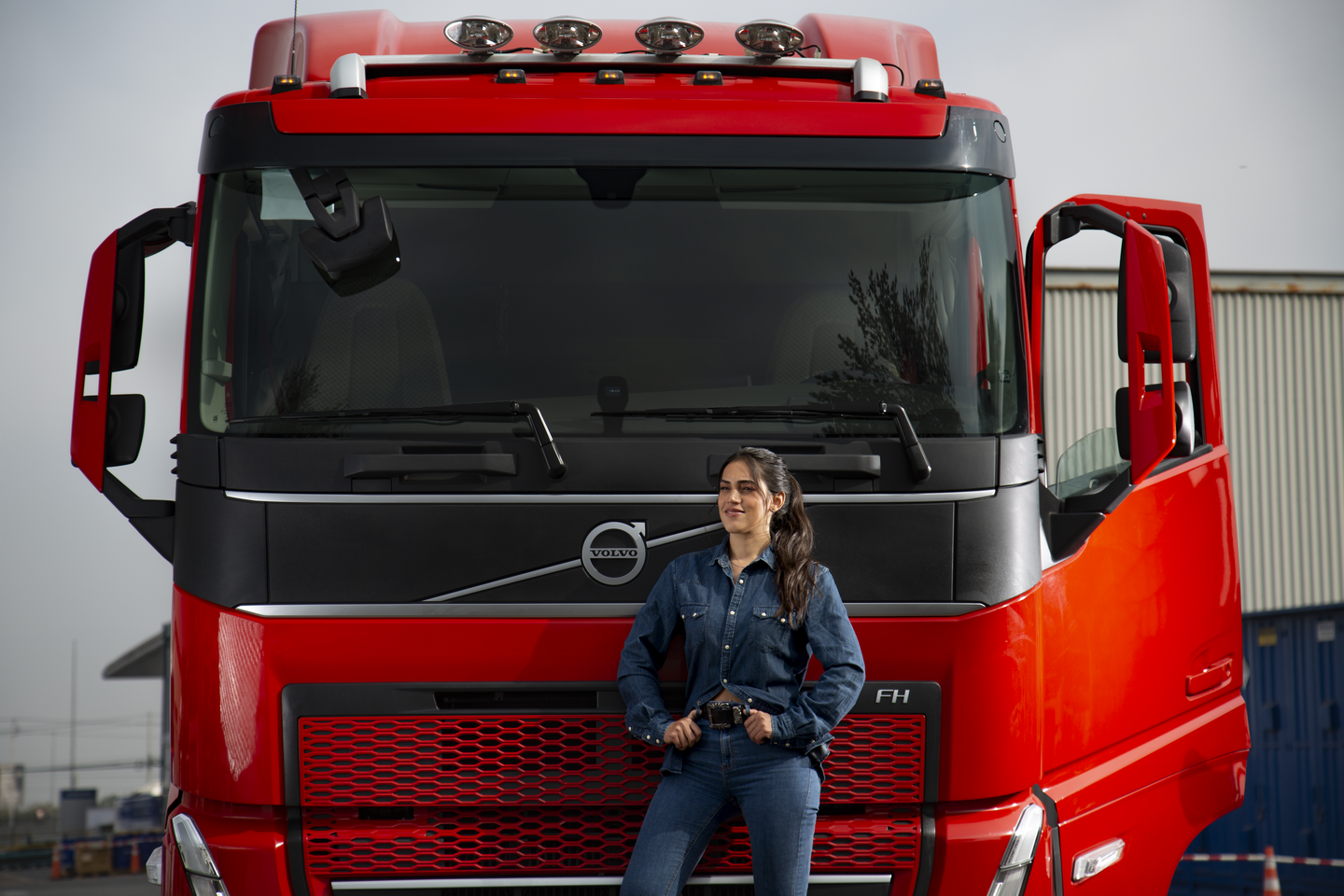
The history of transport in Spain cannot be understood without the courage of those women who, in times when the sector was exclusively male, decided to challenge established norms.
Names like Catalina García González, who in 1928 became one of the first women to manage and drive buses in León, or Celia Rivas Casais, the country’s first female truck driver in 1932 transporting fish through Galicia, are examples of a determination that paved the way for future generations. Later, in 1983, Estrella Aranda would make history as the first female train driver (maquinista) for the Madrid Metro, proving that there were no insurmountable glass ceilings in the sector. These pioneers laid the foundations for a transformation that is now beginning to bear fruit.
Progress in the integration of women into public transport is now a quantifiable reality in Spain. Madrid Metro and Renfe have progressively increased the hiring of women in operational roles, reaching a point in 2023 where 44 percent of the new positions announced by the Madrid underground were occupied by women. A significant milestone occurred in 2022 when Renfe appointed a woman to lead a team of train drivers for the first time, reflecting a firm commitment to equal opportunities. The Barcelona Tramway is also advancing steadily, and in 2024 it achieved that 30 percent of its driver workforce were women, thanks to specific training programs and active inclusion policies.
In this context of transformation, the Fourth National Congress of Women in Transport, to be held next March 5th in Madrid, is consolidated as an unmissable event to continue promoting equal opportunities. Organized by Difundalia, this meeting will bring together professionals, companies, and institutions committed to the modernization of the sector. The presence of Ford Trucks as the sponsoring company of the Congress reinforces the message that diversity is not a secondary issue, but a strategic value to build a more innovative, sustainable, and representative transport system for the society it serves.
Ford Trucks’ participation in the Congress coincides with a key moment for the company, which is presenting significant advancements such as the new GEN2 generation, the Ford F-MAX MCA, and the upcoming launch of its electric truck. Behind these technological innovations lies a deep conviction: diversity drives innovation. As the company states, “we firmly believe in talent, regardless of gender, as an engine for growth.” This inclusive vision recognizes that diverse teams are more creative, better at problem-solving, and better prepared to face the challenges of a sector in the midst of a technological and environmental revolution.
Despite the progress, the presence of women in certain areas of transport remains low, especially in technical and heavy vehicle driving positions. The visibility of female role models, work-life balance policies, and specialized training programs are proving to be essential tools for continuing to advance. Initiatives like “Girls on the Train of Science and Technology,” promoted by the Spanish Railways Foundation, work precisely to spark scientific and innovative vocations among young women, bringing the sector’s technological advances closer and building a pool of female talent for the future.
Have any thoughts?
Share your reaction or leave a quick response — we’d love to hear what you think!
-
 0
0
-
 0
0
-
 0
0
-
 0
0
-
 0
0
