
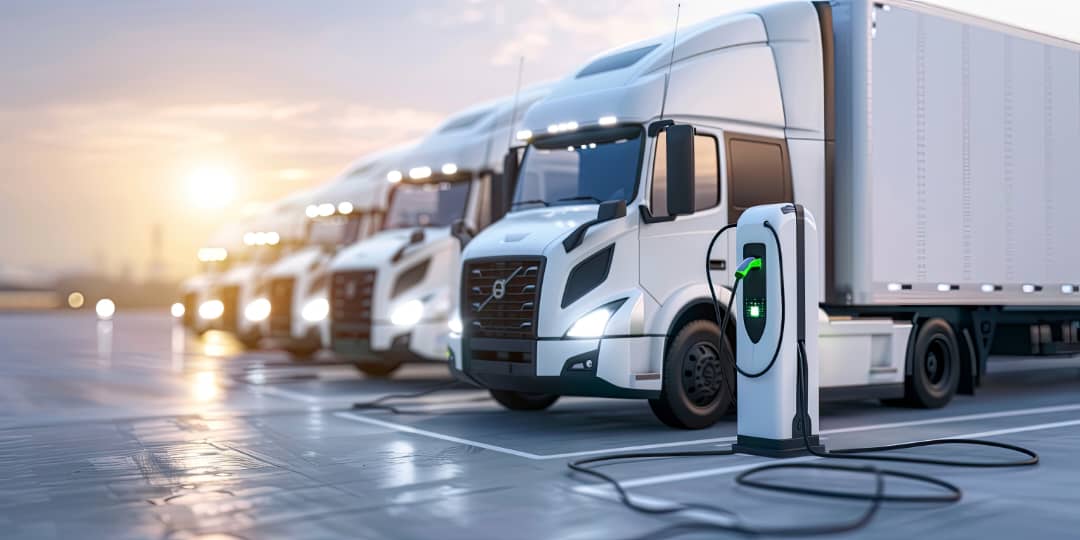
The transition to the electrification of freight transport has begun to clash with a rigid regulatory framework designed for a diesel era. The International Road Transport Union (IRU) has acted as a catalyst for an urgent debate, bringing together EU lawmakers, manufacturers, logistics operators, and energy providers. The core of the problem is practical: long charging cycles, limited infrastructure availability, and the need for meticulous planning are redefining the driver’s working day. The looming question is whether the current EU driving and rest time rules, a cornerstone of road safety and labour rights, are compatible with the day-to-day operation of an electric truck.
Industry players warn of an immediate risk: legal uncertainty. They fear that, in the absence of clear and unified guidelines, each member state will interpret how to apply these rules to new scenarios—such as charging during a mandatory break or in a depot—in its own way. This divergence, they argue, would fracture the Single Market just when investment in sustainable fleets is most needed, creating competitive disadvantages and slowing down the green transition. The request is not necessarily to change the law immediately, but to achieve a coherent and predictable application across the Union.
From Brussels, the European Commission, represented by Kristian Schmidt, adopts a stance of cautious pragmatism. It acknowledges the need for clarity and practical solutions but underscores non-negotiable principles: rest periods must be “real” and not time occupied by charging logistics, and a level playing field for all operators must be preserved. Its position is one of active listening; it is willing to learn from on-the-ground experience to assess whether the legal framework requires clarification or adjustments, without compromising hard-won social standards.
The debate, as highlighted by Raluca Marian of IRU, has moved beyond purely regulatory matters to delve into the human factor of electrification. It is argued that the success of this transition depends not only on cables and charging stations, but also on how it affects operational planning, drivers’ working conditions, and the need for new skills. The conclusion drawn from the workshop is that any regulatory adaptation must strike a delicate balance: maintaining social protection for workers while ensuring the economic viability of companies betting on decarbonisation.
In short, the emerging consensus is that the electric revolution demands an intelligent evolution of regulations. The idea is not to dismantle rest rules, but to reinterpret them for scenarios unthinkable a decade ago. The path, as it stands, involves close collaboration between industry and regulators to define solutions that reconcile safety, labour rights, and operational reality. This workshop was just the first step in a dialogue that will continue, seeking to place people at the heart of a road transport sector that strives to be both green and socially just.
Have any thoughts?
Share your reaction or leave a quick response — we’d love to hear what you think!
-
 0
0
-
 0
0
-
 0
0
-
 0
0
-
 0
0
