
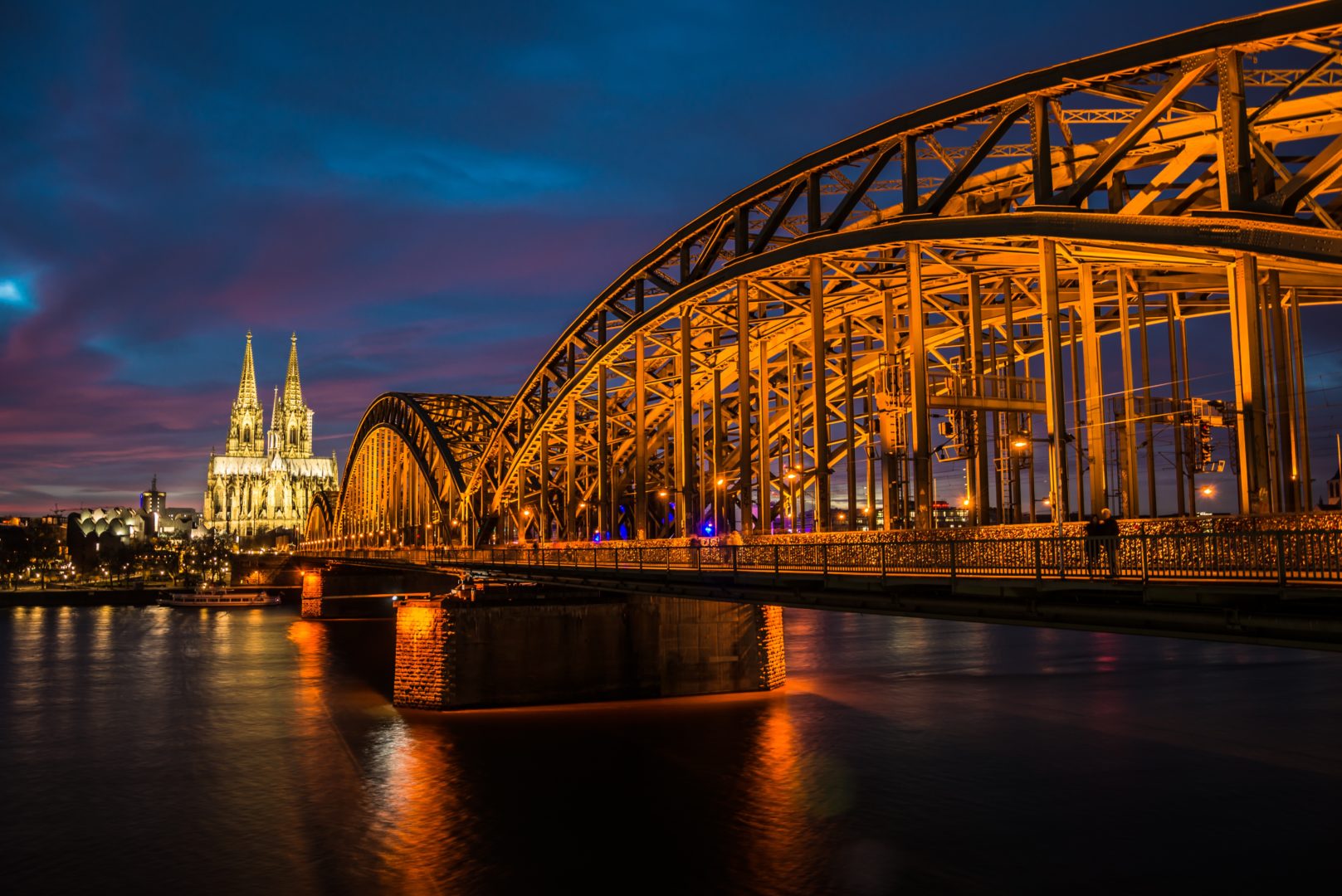
Several Spanish media outlets have recently picked up on a piece of news that will directly affect transport operators travelling across Europe: from February 2026, the Bonn-Nordbrücke over the River Rhine will close to trucks weighing over 7.5 tonnes. For many Spanish drivers whose routes pass through the former capital of West Germany, this measure will mean a significant change to their journeys. This viaduct, a steel girder and concrete pillar structure built between 1964 and 1966 during Bonn’s time as the federal capital, is much more than a 432-metre crossing. It represents a vital artery connecting the city’s southern and northern districts, facilitating not only local and regional traffic but also the flow of goods between the A565 motorway and the northern metropolitan area, bearing the daily load of between 1,500 and 2,000 heavy trucks.
The decision to restrict heavy traffic is not arbitrary but an urgent response to a structural safety problem. Recent technical inspections have revealed advanced fatigue in key elements of the structure, particularly at the nodes of the main girders and the supports. The bridge, designed for the standards and vehicle weights of the 1960s, suffers from cumulative wear caused by the constant passage of modern trailers weighing up to 40 tonnes, which has led to corrosion and micro-cracks. Previous temporary measures, such as 30 km/h speed limits for trucks, had already been implemented to reduce damaging vibrations, but a total ban is now deemed the only way to extend the bridge’s service life and avoid a potential collapse.
Alongside safety, other weighty reasons converge for the closure. The city of Bonn, in line with its ambitious climate neutrality strategy for 2035, is driving a sustainable mobility plan that prioritises public transport and bicycles. Restricting heavy diesel traffic directly contributes to reducing high levels of nitrogen oxides and noise pollution in its residential areas, an imperative also driven by European Union environmental directives. Thus, the measure is a clear example of how environmental protection and green urban planning intertwine with the pressing need to maintain critical, yet ageing, infrastructure.
The logistical impact will be palpable. The affected trucks, among which many with Spanish license plates will undoubtedly be found, will have to seek alternative routes. The most direct is the Kennedy Bridge (Kennedybrücke) within Bonn, but it is already congested, so significant bottlenecks are anticipated. For long-distance traffic, authorities recommend diverting to the motorway network, using the Motorway Bridge (Südbrücke, on the A59) or, further north, the Rodenkirchen Bridge (on the A4), which connects to Cologne. These alternatives, although functional, will inevitably lead to longer journey times, higher fuel consumption and operational costs, a reality that German hauliers’ associations have already vehemently protested.
This decision is not an isolated incident but a symptom of a greater challenge in Germany. The country faces a crisis of ageing infrastructure, with several bridges over the Rhine, such as the emblematic Leverkusen case, subject to restrictions or undergoing multi-million euro reconstruction processes. The Bonn-Nordbrücke is at the centre of an intense debate on whether it should be fully rehabilitated – which would entail a total closure for years – or whether a new bridge should be built in parallel. The funding, a complex triangle between the federal government, the state of North Rhine-Westphalia and the municipality, delays any definitive solution until well into the next decade.
In short, the partial closure of the Bonn-Nordbrücke is a drastic measure that illustrates the constant tension between the need for freight transport, public safety, environmental protection and budgetary constraints. For international transport operators, it is a wake-up call about the increasing regulation of heavy traffic in European urban centres and a practical reminder that, from 2026, the route map in the heart of the Rhineland will have to be recalculated, anticipating diversions and a new road reality where sustainability and structural safety are increasingly setting the pace.
Have any thoughts?
Share your reaction or leave a quick response — we’d love to hear what you think!
-
 0
0
-
 0
0
-
 0
0
-
 0
0
-
 0
0
