
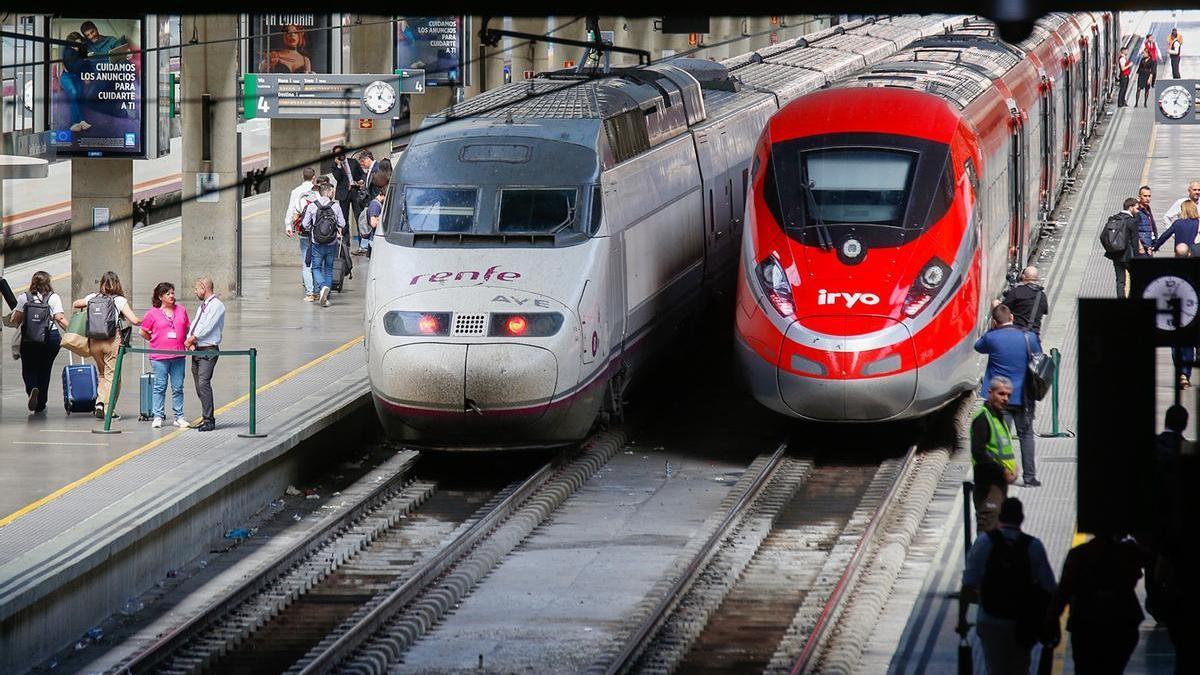
The investigation into the serious Aldamuz train accident, which claimed the lives of 45 people, faces a crucial moment this Tuesday with the opening and analysis of the black boxes from both trains involved. According to El Periódico, the president of the Commission for the Investigation of Railway Accidents (CIAF), Iñaki Barrón, confirmed that the data download will be carried out on January 27.
This information, under police custody, promises to reveal determining details about the circumstances of the crash and even images from the moments before the impact.
The analysis of the black boxes, belonging to the Iryo train that derailed and the Alvia that collided with its carriages, primarily aims to clarify the origin of the accident. Barrón, in statements to El Periódico, stressed that this process will advance in parallel with the judicial investigation to determine possible criminal responsibilities. The CIAF will also hold a plenary session this week, hoping to obtain significant advances that shed light on a tragedy that has shocked Spain.
While awaiting the data from the black boxes, the investigation already has a main hypothesis regarding the physical cause of the accident.
According to a preliminary CIAF report covered by Datos RTVE, evidence points to the Iryo derailing due to the prior fracture of a rail in a welding zone. This fracture, about 40 centimeters long, was located in a turnout renewed in 2025 and would have acted as a “step” that caused the track to lose continuity.
The main evidence supporting this hypothesis, according to Datos RTVE, are the marks found on the wheels of several Iryo carriages, compatible with impact against the broken rail. Furthermore, similar marks were found on the wheels of three other trains that passed the same spot hours and even minutes before the accident, which would indicate that the track was already fractured before the stricken convoy passed, which was traveling at about 200 km/h.
The CIAF report, cited by Datos RTVE, details that the problematic weld is part of works executed in 2025 by a joint venture (Ferrovial, OHL, FCC and Azvi) and was welded and reviewed by companies linked to Adif. Although the Minister of Transport, Óscar Puente, has defended the scheduled maintenance controls, he has ordered the analysis of all batches of the rail manufactured by ArcelorMittal and does not rule out reviewing protocols in the future.
Awaiting what the black boxes reveal, the investigation proceeds this Monday with a focus on two parallel lines: the technical confirmation of the rail fracture hypothesis and the determination of responsibilities in the installation and maintenance chain.
The case, which concentrates the attention of authorities, railway operators, and citizens, hopes to take a qualitative leap tomorrow with the data stored in the on-board recorders.
Have any thoughts?
Share your reaction or leave a quick response — we’d love to hear what you think!
-
 0
0
-
 0
0
-
 0
0
-
 0
0
-
 0
0
