
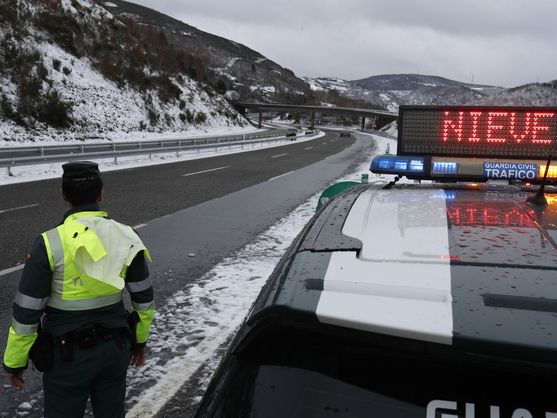
Spain is facing a weekend marked by the violence of storm Ingrid, which has triggered red warnings for maritime conditions in Galicia—with waves of up to 9 meters—and has brought the snow line in the northwest and northern plateau down to unusually low levels, around 300-500 meters. This episode, typical of Atlantic winter but with notable intensity, combines very strong and widespread winds, persistent rain, and a penetrating cold accentuated by the wind chill. The situation reached its most critical point on Friday, with Saturday maintaining the harsh conditions, especially on the coast and in snowy areas, and a slow retreat on Sunday, though without an immediate return to normalcy.
The impact is uneven but severe. Galicia and the Cantabrian coast are bearing the brunt of the sea’s assault, with specific risks of coastal flooding and damage. Simultaneously, the interior of the northwest, Castile and León, and mountain areas are preparing for snowfall that, while not historic in accumulation, is significant due to the low altitude, threatening to paralyze secondary roads and complicate access. The wind, with hurricane-force gusts, acts as a multiplier of chaos, reducing visibility, increasing the feeling of cold, and causing incidents such as falling trees or objects.
Faced with this scenario, authorities have adopted exceptional measures for road transport. The General Directorate of Traffic (DGT), following warnings from the State Meteorological Agency (AEMET), has preventively prohibited the circulation of trucks over 7,500 kg on numerous stretches of roads in the northwest and central peninsula over the weekend. The decision aims to guarantee road safety and the operability of emergency services, given the high risk of heavy vehicles being blocked by snow or swept away by the wind, creating critical obstructions.
However, the Spanish Confederation of Freight Transport (CETM) has responded with harsh criticism, warning that these restrictions, without sufficient logistical support, can leave professional drivers “literally stranded” on the road, violating rest periods and assuming serious risks. The sector calls on the Ministry of Transport and the DGT for greater foresight, the full deployment of snowplows, and flexibility to lift prohibitions as soon as possible, emphasizing that they are the first to be concerned about safety but also about service continuity.
In conclusion, the weekend closes a highly intense meteorological episode that goes beyond the anecdotal to become a logistical and safety crisis. As Ingrid retreats, leaving behind a trail of rough seas, snow at low altitudes, and minor damage, the debate on the management of these emergencies in freight transport is now open. The balance between extreme caution and the operability of a vital sector will undoubtedly be one of the most palpable legacies of this storm.
Have any thoughts?
Share your reaction or leave a quick response — we’d love to hear what you think!
-
 0
0
-
 0
0
-
 0
0
-
 0
0
-
 0
0

1 comment
[3182]62jl Casino: Best Online Slots in the Philippines. Quick 62jl Login, Easy Register, and Official 62jl App Download. Join 62jl Casino for the best online slots in the Philippines! Quick 62jl login, easy 62jl register, and 62jl app download. Play top 62jl slot games and win big today! visit: 62jl