
Extreme winter driving: more than caution, a strategy.
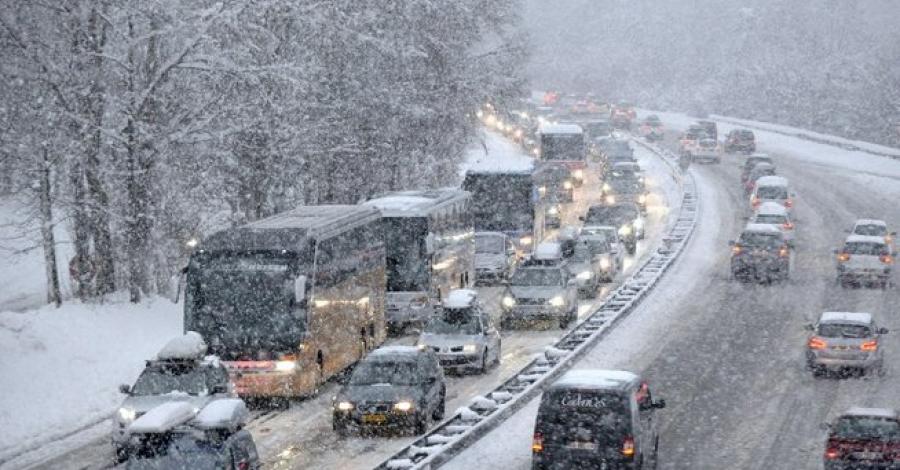
The arrival of severe winter conditions – with sub-zero temperatures, freezing rain, snowfall, and the formation of ice sheets on the road – transforms driving into an exercise of maximum attention and technique. Faced with this scenario, which paralyses cities and turns roads, especially mountain or complicated routes, into authentic skating rinks, the driver must adopt a preventative mindset. It is not just about going slower; it is about planning, preparing, and executing every trip as a controlled-risk operation, where a single mistake can have serious consequences.
The key: preparation before turning the key.
Before undertaking any journey, planning is the primary life insurance. It is essential to check the status of the roads and official weather alerts, and to assess whether the trip is truly necessary. The vehicle must be in optimal condition: tyres with correct pressure and, ideally, specific winter tyres or with very deep tread; adequate levels of antifreeze and windscreen washer fluid; and a good battery. Inside, it is mandatory to carry snow chains or studded tyres (according to local regulations) and an emergency kit including a blanket, reflective vest, torch, water, and some food. The driver and passengers should dress warmly, in case an emergency forces them to abandon the vehicle.
On highways and in the city: extreme smoothness and safety distance.
Once on the move, the watchword is smoothness. Any abrupt manoeuvre – accelerating, braking, or turning – can cause loss of control on ice or compacted snow. Speed must be significantly reduced and the safety distance tripled at a minimum. In the city, extreme caution is needed on bridges, overpasses, and shaded areas, where ice forms first. Brakes should be used with extreme delicacy, preferably using engine braking. Maintaining constant traction and avoiding sudden lane changes are fundamental to not losing control of the vehicle.
The greatest danger: steep and mountain roads.
On winding roads, with steep slopes and limited safety barriers, the risk multiplies. Here, in addition to all the previous measures, the use of chains is vital when mandatory or when snow accumulates. On ascents, a long and constant gear should be maintained to prevent the wheels from spinning. On descents, it is crucial to use low gears to brake with the engine and avoid continuous use of the brake pedal, which can lead to fading (loss of effectiveness) or wheel lock-up. One should never attempt to overtake under these conditions and must be prepared to find stopped vehicles on any curve.
The humility of the expert driver.
In the face of extreme weather, even the most expert driver must act with humility and respect. The most important alert is internal: recognizing that conditions are at the limit and that the vehicle’s capacity to react is minimal. When in doubt, the safest course is to postpone the trip, find a safe place to stop if the situation worsens, or simply not set out. Severe winter driving does not test bravery, but responsibility. Arriving a little later, or not arriving at all, is always preferable to never arriving.
Have any thoughts?
Share your reaction or leave a quick response — we’d love to hear what you think!
-
 0
0
-
 0
0
-
 0
0
-
 0
0
-
 0
0

5 comments
Putting some trust in 715betwin. Their platform looks easy to use, which is a plus. Let’s see if they’re a winner! Explore the site 715betwin
Trying out 735betfun for a night of entertainment. Hopefully the name delivers on the fun part! Lets test the bet! See for yourself 735betfun
C54game is the next target. Ready to test my strategy on the games, aiming for jackpot. Time to strategize! Click here c54game
[7770]PHDream: The Best Online Casino in the Philippines. Register, Login, and App Download for Premium Casino Slots. Experience PHDream, the top online casino in the Philippines. Register & login to play premium PHDream casino slots. Get the PHDream app download for elite mobile gaming today! visit: phdream
[7200]MerryPH Online Casino Philippines: Easy Login, Register, Slot Games, and Official App Download. Experience the ultimate gaming thrill at MerryPH, the most trusted online casino in the Philippines. Enjoy a seamless MerryPH login and quick MerryPH register process to access world-class MerryPH slots and live dealer games. Enhance your mobile experience with the official MerryPH app download. Join MerryPH online casino today for secure betting, exciting bonuses, and big wins! visit: merryph