
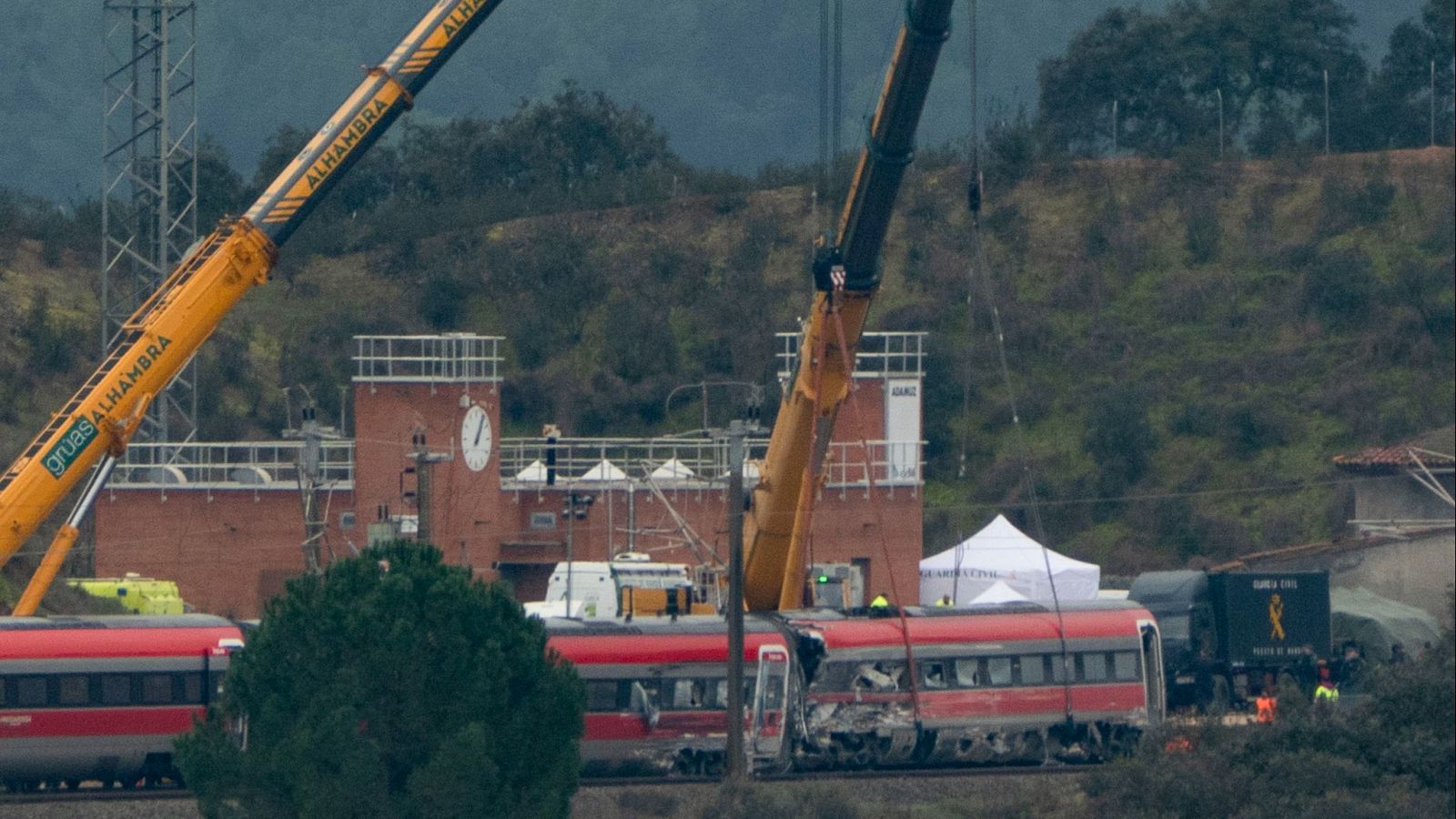
The investigation into the fatal derailment in Adamuz (Córdoba) has taken a significant turn following the discovery of notches on the wheels of the first carriages of the crashed Iryo train. According to reports from the EFE agency and local media, experts have identified coin-sized marks that match fragments of the broken track, strengthening the hypothesis that a worn rail joint may have been the initial trigger. The Minister of Transport, Óscar Puente, confirmed these indications, although he warned that it is still not possible to draw definitive conclusions. The central question, widely reported by the Spanish press, is whether the 30-centimeter gap found on the rail was the cause or a consequence of the accident.
The Investigation Focuses on Infrastructure and Extends Its Scope to Previous Trains
While the Commission for the Investigation of Railway Accidents (CIAF) leads the investigation, the focus is expanding to examine whether other trains that traveled earlier on the Madrid-Sevilla section have similar damage. Puente stated in an interview with Telecinco that “it is possible that the two or three trains that passed before have similar marks,” which would suggest a progressive deterioration of the infrastructure. If it is confirmed that a track deficiency caused the accident, responsibility would fall on Adif, the public company in charge of maintaining the network. This organization, dependent on the Ministry of Transport, operates independently from Renfe, the operator of the second train involved.
The Number of Fatal Victims Rises to 43 Amid the Painful Identification Process
Parallel to the technical investigation, the human toll of the catastrophe continues to darken. Authorities raised the number of fatalities to 43 this Wednesday, January 21, after a final victim was found inside the Alvia train, the second one involved in the collision. According to reports from local media cited by EFE, 41 of the bodies have already been identified by the team of 27 forensic experts from the Institute of Legal Medicine of Córdoba. Additionally, 37 injured remain hospitalized, nine of them in serious condition in the ICU, while 86 people have been discharged.
Rescue Operations and Crisis Meetings at Ground Zero of the Tragedy
At the accident site, emergency teams are working around the clock to clear the tangle of twisted metal. The efforts focus on cutting up the carriages and preparing the terrain to allow access for heavy machinery, crucial for removing two cars that fell down an embankment. Meanwhile, carriage number 6 of the Iryo, the first to derail and considered key to the investigation, has been immobilized and removed. In a gesture of coordination, the regional and central government, along with the operators Adif, Renfe, Iryo, the manufacturer Hitachi Rail, and support organizations, held a meeting in Córdoba to address crisis management and family support.
A Series of Railway Accidents and a Strike Highlight a Safety Crisis
The Adamuz tragedy is not an isolated event. The Spanish railway system is experiencing days of chaos following two more derailments in Catalonia this week, one fatal near Barcelona due to a wall collapse caused by rain. This context of incidents, widely covered by agencies like EFE, has generated social alarm and led the main drivers’ union (SEMAF) to call a strike to demand greater safety guarantees. The union has announced that it will demand “criminal responsibilities” for failures in the infrastructure. Thus, the combination of technical evidence, the increase in the number of victims, and the sectoral crisis paints a complex picture where the demand for answers and accountability becomes urgent.
Have any thoughts?
Share your reaction or leave a quick response — we’d love to hear what you think!
-
 0
0
-
 0
0
-
 0
0
-
 0
0
-
 0
0
