
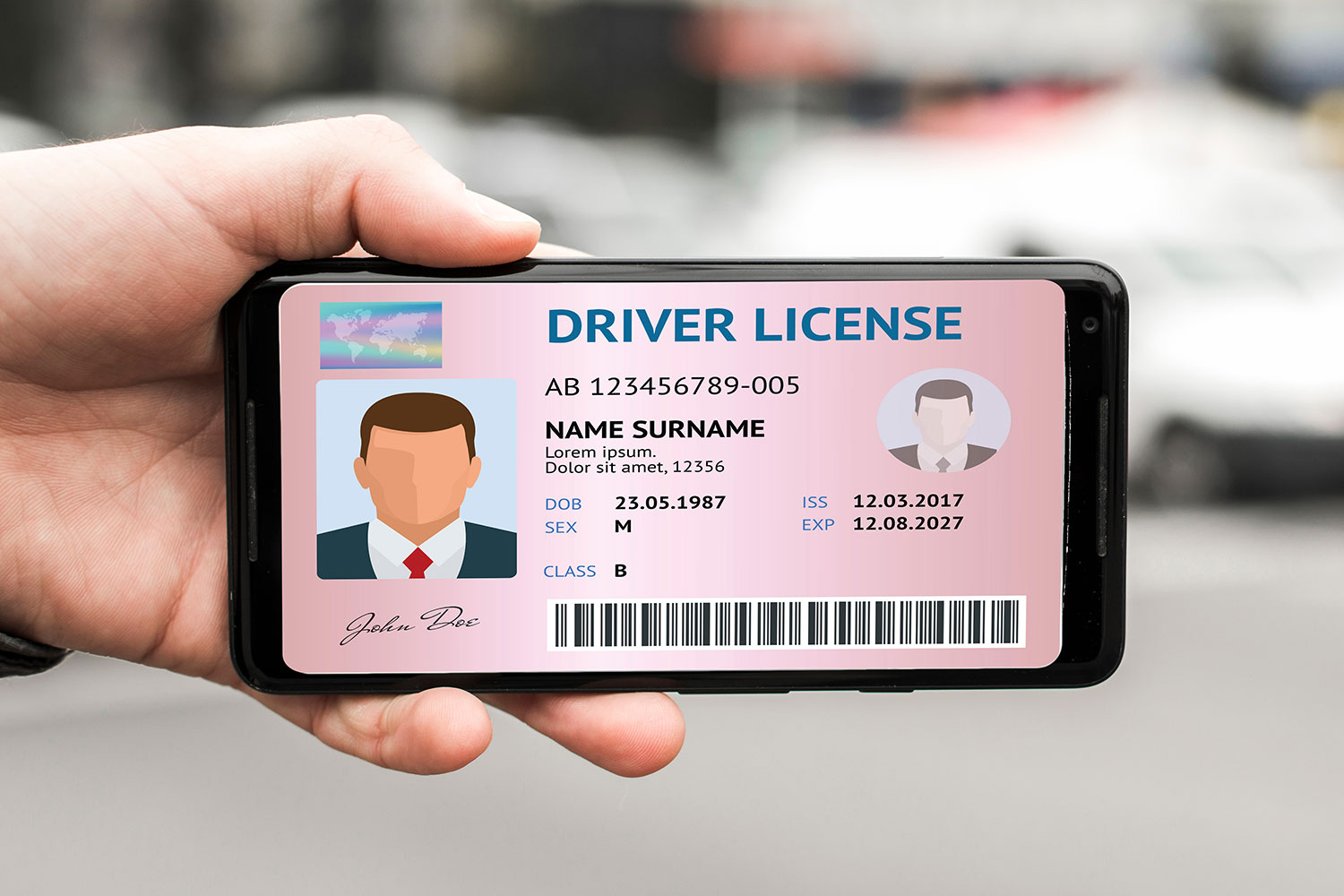
In 2028, the driving license as we know it will disappear to make way for a mandatory digital revolution in the 27 member states. This is not a national initiative, but a community directive driven from Brussels by the European Commission and its president, Ursula von der Leyen. This historic reform, which will affect more than 250 million drivers, will abolish the traditional plastic document to integrate it into the mobile phone, with full legal validity throughout the Union. Digitization seeks not only convenience but also to modernize a system anchored in the past.
The change responds to an urgent need: to harmonize mobility in a space without internal borders. Currently, the rules for issuance, renewal, and penalties vary enormously between countries, creating dangerous legal gaps. Brussels considers it unacceptable that a driver suspended in one country can continue to drive legally in another. Therefore, the new unified European license will be the cornerstone of a common road safety system, where the rules and their consequences are the same in Lisbon, Berlin, or Athens.
One of the most significant novelties is the creation of a harmonized European register of serious offenses. License withdrawals and suspensions will take automatic effect across the Union, thus closing the door to cross-border impunity. If a driver loses their license in France due to a serious offense, they will not be able to get behind the wheel in any other Member State. This measure aims to deter risky behavior and uniformly raise safety standards.
The reform will also unify the criteria for license validity and medical checks, especially for those above a certain age. Although the specific details remain to be defined, the goal is to establish common standards of physical and mental fitness, putting an end to current disparities. Likewise, probationary periods for new drivers will be strengthened, with stricter rules and exemplary penalties, in order to reduce youth accident rates.
The schedule sets 2028 as the final deadline for full implementation, although some measures could be brought forward to 2026. The process will be gradual, as each country will have to transpose the directive into its national legislation. Nevertheless, the message is clear: the license we carry in our wallet today has its days numbered. Europe has decided to take an irreversible leap towards a more digital, safe, and cohesive mobility, forever changing our relationship with the steering wheel.
Have any thoughts?
Share your reaction or leave a quick response — we’d love to hear what you think!
-
 0
0
-
 0
0
-
 0
0
-
 0
0
-
 0
0
