
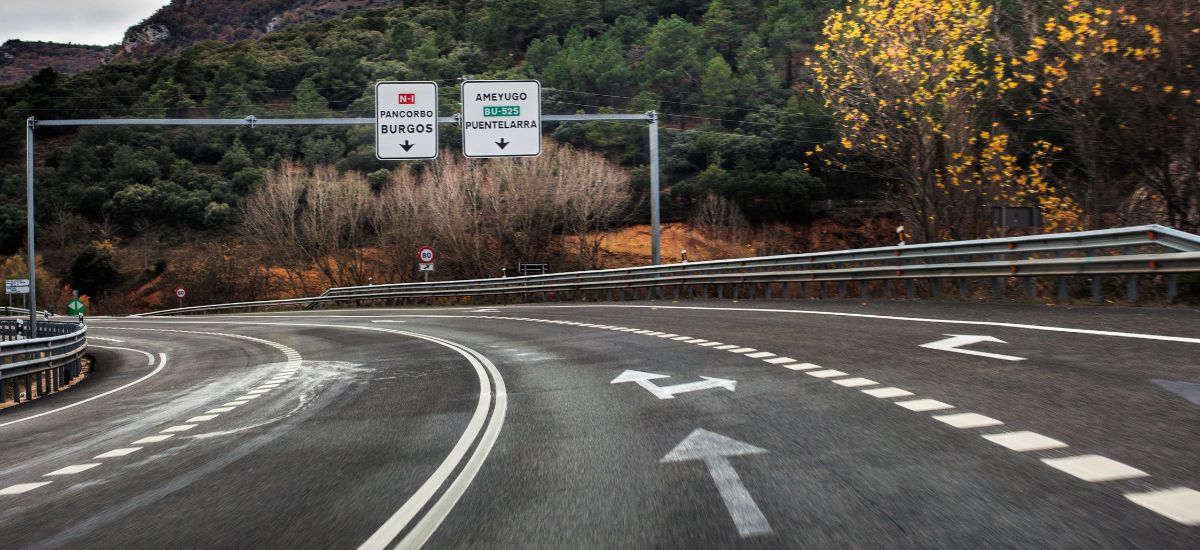
The Spanish radial highways, those asphalt tentacles stretching out from Madrid to every cardinal point, are the veins through which the economy circulates. For the professional driver, the A-1 to the north, the A-4 to the south, or the endless A-6 to the northwest, are not just routes; they are the stage for a profession practiced in the constant tension between monotony and alertness, between sought-after solitude and longed-for company.
Driving Alone: The Realm of Silence and Autonomy
Advantages: Absolute concentration. The driver is the sole master of his cabin, his decisions, his stops, his music, or his silence. There is an operational intimacy that many veterans prefer. It allows for a personal rhythm, time for reflection, and on very familiar routes, it can be almost meditative.
Disadvantages: The risk of monotony and mental fatigue multiplies. Prolonged solitude can generate isolation, boredom, and, in extreme cases, affect mental health. In an emergency, a sudden illness, or simply when facing a complicated decision, there is no immediate second opinion. “Highway hypnosis” is a real danger on long, straight, and lonely stretches.
Driving with a Partner: The Strength of Two
Two pairs of eyes watch the road, they take turns driving where permitted, they keep each other awake by talking. Company combats stress and fatigue. It provides logistical support (navigation, paperwork, communication) and emotional support.
Disadvantages: Conflict can arise if there is no good rapport. Concentration can be easily broken. Privacy is non-existent, and in such confined spaces, personal habits can cause friction. Relying on another also means ceding part of the control.
The Expert Advice: The Voice of Experience on the Asphalt
To illustrate this analysis, we turned to Julián Gómez, an expert in Road Safety and Logistics, with 30 years of experience training professional drivers:
“The Spanish road, especially on the long radial highways, is a technically good but psychologically demanding environment. The key lies not only in whether one drives alone or accompanied, but in how each situation is managed.
For the middle-aged, experienced driver: You already know the road and, more importantly, you know yourself. Use your experience to plan intelligently. If you drive alone, impose a strict discipline of technical stops every two hours, even if you’re not tired. Use technology to your advantage: podcasts, audiobooks, keeping in touch via hands-free with other colleagues. Experience is not a shield against fatigue; it is a tool to anticipate it. If you choose to have company, be the one to set the professional tone in the cabin.
For the novice driver: Inexperience is combated with humility and protocol. If possible, your first long hauls should be done accompanied by a veteran. It is the best school. You will learn to read the road, manage rest times, and interpret the weather on different stretches. If you drive alone, take extreme precautions. Do not try to imitate the pace of the more experienced. Stop at the first sign of drowsiness. The cabin is not a place to demonstrate heroics, but to demonstrate constant professionalism.
In both cases, remember: you carry tons of responsibility. It’s not just cargo; it’s the safety of those who share the road with you. A cabin is a mobile workplace. Treat it with the respect it deserves.”
Beyond personal choice, the “alone vs. accompanied” debate transcends personal preference. It is a matter of safety, efficiency, and occupational health. Transport companies should encourage, when operations allow it, formulas that combat extreme isolation without forcing unworkable cohabitations.
In the end, on the vastness of the A-3 heading east or the A-5 heading west, what defines a good professional is not the silence or the conversation in their cabin, but the permanent attention to the white line that guides them, to the rhythm of their body, and to the enormous burden, tangible and intangible, they carry on their shoulders. The road does not forgive distractions, but it also does not forgive dehumanization. Finding the balance is the invisible art of this kilometer-long profession.
Have any thoughts?
Share your reaction or leave a quick response — we’d love to hear what you think!
-
 0
0
-
 0
0
-
 0
0
-
 0
0
-
 0
0
