
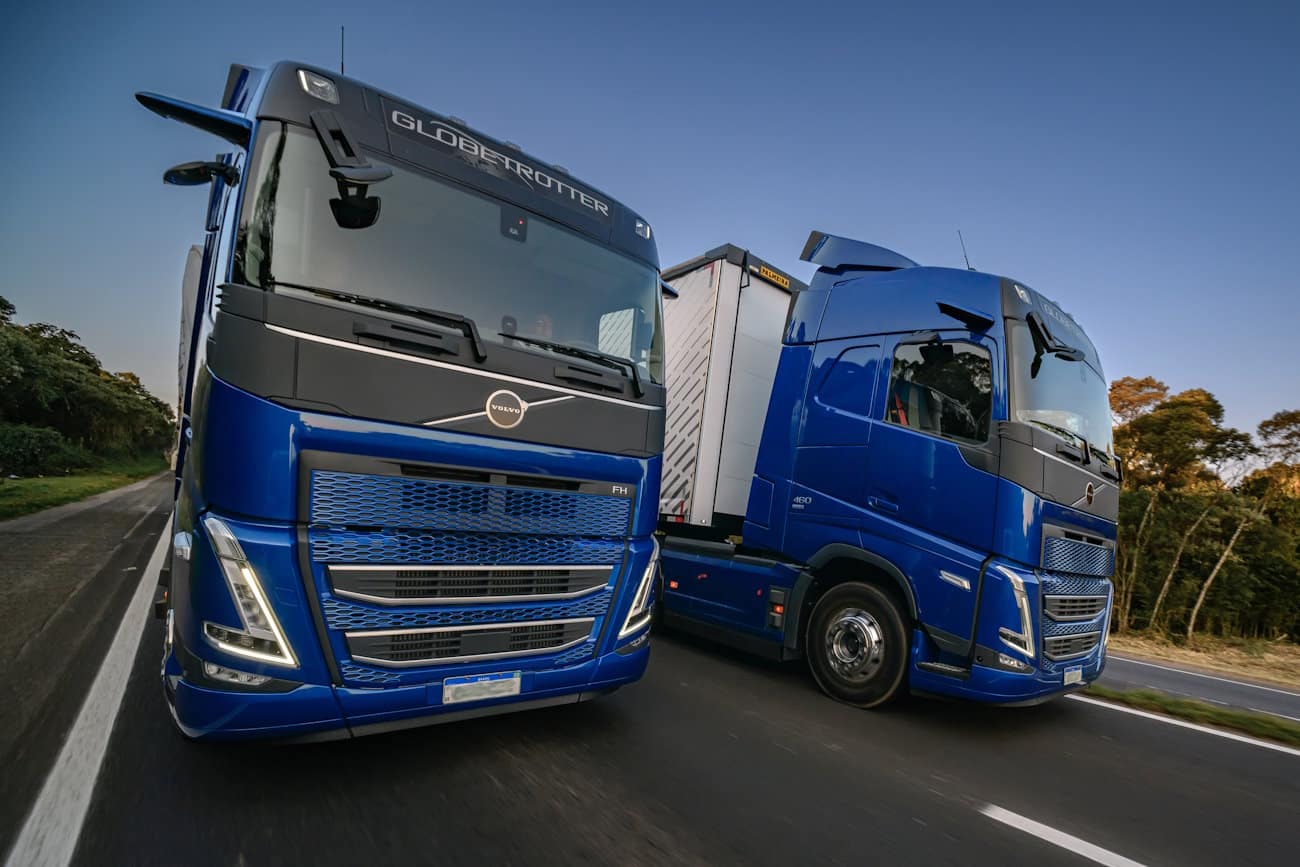
Germany, Europe’s industrial powerhouse, has set its sights on an ambitious goal: climate neutrality by 2045. A central pillar of this green transition is the transport sector, responsible for a fifth of the country’s emissions, where road freight plays a critical and hard-to-electrify role.
The decarbonization process is moving at two speeds: with strong political will—exemplified by the law requiring new trucks on major routes to be zero-emission from 2030—and an accelerated industrial race, yet it faces significant logistical and economic hurdles.
Germany’s industrial ecosystem, home to automotive giants, is undergoing a full transformation. Manufacturers like Mercedes-Benz, MAN (part of the Traton Group), and Volvo Trucks (with a strong presence in the country) have already begun series production of 100% battery-electric heavy-duty trucks (BEVs). Models like the Mercedes eActros or the MAN eTGM are already operating in selected customer fleets. Meanwhile, the bet on green hydrogen, though longer-term, is gaining ground, with fuel cell prototypes (FCEVs) from Daimler Truck. However, plug-in hybrid offerings for trucks are more limited and are seen as a bridging technology, with efforts focused on pure electrification and hydrogen.
Until 2025, the scenario was one of accelerated transition, but the bottleneck was less in the factory and more on the road.
The deployment of a high-power charging network for heavy vehicles (MCS) is progressing slowly, casting doubt on the operational feasibility of fully electric long-haul fleets.
Electric trucks have already proven their effectiveness in regional routes, urban delivery, and “hub-to-hub” applications, reducing operational emissions to zero. It is these niches that will see greater penetration in the short term.
The economic dilemma, an uphill battle for hauliers. Here lies the core challenge: cost. An electric truck can double or triple the initial investment compared to its diesel counterpart. For an owner-operator or a small transport company, this figure is often prohibitive.
Although operating (electricity vs. diesel) and maintenance costs are lower, the high upfront investment and still uncertain battery lifespan create uncertainty. The German government is trying to mitigate this with substantial purchase subsidies, which can cover up to 80% of the price difference with a diesel truck, and toll exemptions, but many hauliers remain skeptical about long-term profitability.
While batteries are becoming established for medium distances, the technological race for long-distance heavy transport remains open.
Trucks powered by green hydrogen (FCEVs) promise ranges and refueling times similar to diesel, but their mass commercial development will come later.
Solutions like electrified highways (eHighway) are also being explored, with pilot projects underway. The landscape, therefore, will be multimodal: batteries for regional transport, hydrogen and potential electrified routes for long distance.
Germany has started the engine of freight transport decarbonization with industrial determination and regulatory support. Vehicles capable of reducing emissions—mainly battery-electric trucks for distribution—are already in production.
However, the path ahead is a race against time to deploy infrastructure and, above all, to make the transition economically viable for the sector’s smaller players.
Success will depend on robust technological offerings meeting a solid charging network and incentives that convince the final link in the chain: the haulier whose truck keeps the economy moving.
Have any thoughts?
Share your reaction or leave a quick response — we’d love to hear what you think!
-
 0
0
-
 0
0
-
 0
0
-
 0
0
-
 0
0
