
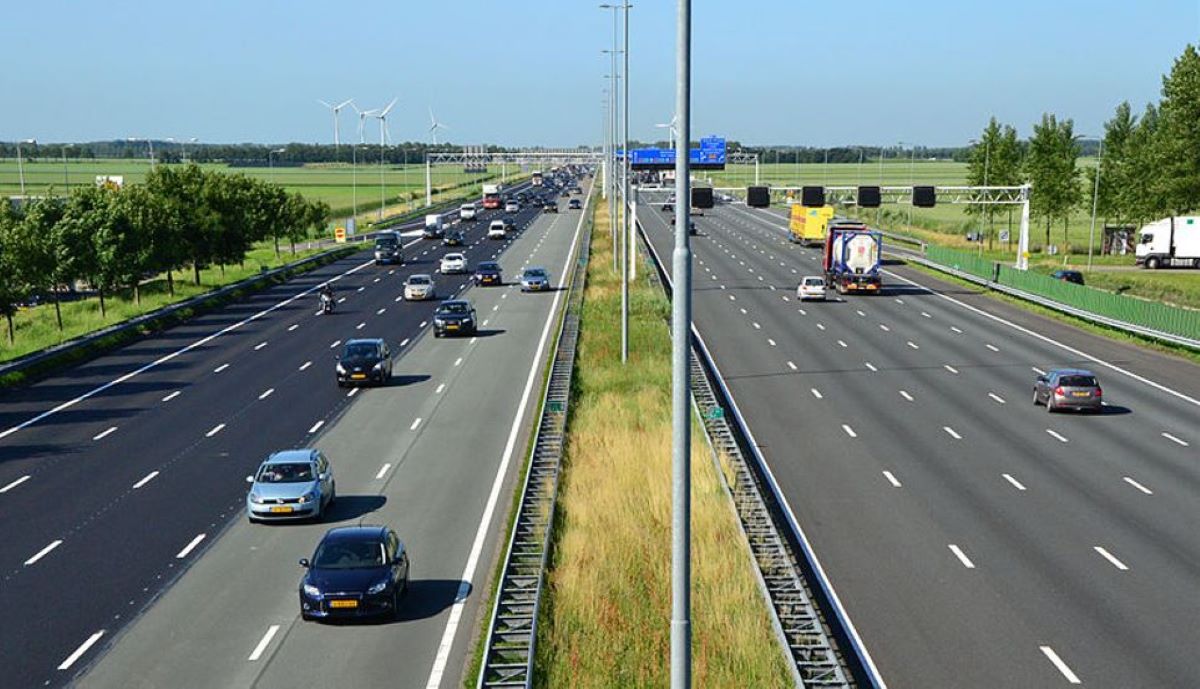
Decarbonized zones have become a fundamental tool in Europe’s fight against climate change and urban pollution, which causes thousands of premature deaths annually from respiratory and cardiovascular diseases. In Spain, the Climate Change Law mandates municipalities with over 50,000 inhabitants to implement Low Emission Zones (LEZ). However, their application clashes with complex socio-economic realities, a dilemma that Madrid exemplifies paradigmatically. The capital, despite having improved its air quality indices in recent years, faces the challenge of balancing the urgent ecological transition with the need not to paralyze its essential activity.
In this context, the Madrid City Council has decided to extend the moratorium on the entry into force of the LEZ across the entire city for one more year, until 2026. This decision, published in the Official Bulletin and made at the end of December, is not coincidental. It responds to intense pressure from economic sectors, led by associations such as the Madrid Fenadismer Transport Federation, who argue that a total traffic restriction without nuance would have “dire consequences” for the economy and urban development.
The uniqueness of Madrid’s approach is a crucial point of the debate. Unlike other cities, the initial plan would turn the entire municipal area into an LEZ, a measure considered by its critics as excessively restrictive and unparalleled in Spain. Opponents of the measure, based on official data from the council itself, maintain that it does not respond to an immediate health emergency – no high pollution episodes have been recorded since 2020 – nor to a specific regulatory requirement mandating such a broad prohibition.
Underlying this is a tension between two equally legitimate mandates. On one hand, state and European guidelines drive the creation of LEZs, although the guide from the Ministry for Ecological Transition, developed with the Spanish Federation of Municipalities and Provinces, called in 2021 for “specific favorable treatment” for professional sectors like transport and delivery, due to being essential. On the other hand, the transport sector warns of a collapse: the current fleet of trucks and construction vehicles, mostly diesel, would be unable to operate, paralyzing emblematic projects.
The list of works that, according to Fenadismer, would be at risk is extensive and strategic: the covering of the A-5, the M-30 capping at Ventas, the remodeling of the Bernabéu surroundings, and major developments like Madrid Nuevo Norte or the Campamento Operation. This argument has hit home, forcing a pause. The moratorium thus presents itself as a lifeline for the capital’s urban development machinery, but leaves the fulfillment of mid-term climate goals up in the air.
The final call from the sector is clear: negotiate a realistic transition. They ask for dialogue with the City Council to find a roadmap that reconciles emission reduction with the provision of a vital economic service. The extension opens a crucial year to seek that elusive balance, a challenge Madrid must resolve to avoid being trapped between the urgency of the planet and the inertia of the city.
Have any thoughts?
Share your reaction or leave a quick response — we’d love to hear what you think!
-
 0
0
-
 0
0
-
 0
0
-
 0
0
-
 0
0
