
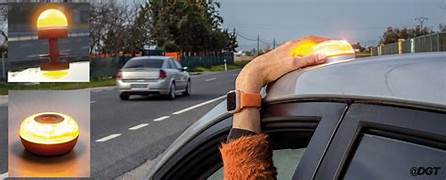
As of January 1, 2026, the mandatory use of the connected V-16 beacon marks a milestone, but its real significance goes beyond replacing warning triangles.
The Director of the DGT, Pere Navarro, has confirmed some initial flexibility in enforcement, prioritizing information over fines. However, the core of this change is the first firm step towards a larger and more crucial goal: the digital connection of Spanish roads for proactive road safety.
The V-16 beacon is not an isolated device. Its true value lies in its ability to emit a geolocation signal to the DGT 3.0 platform in an emergency, providing instant and precise alerts about a disabled vehicle.
This lays the foundation for a system designed to anticipate dangers and reduce uncertainty on the road, protecting both the broken-down driver and other users.
The mentioned flexibility—where the Guardia Civil will inform before fining in the first weeks—responds to a pedagogical strategy to establish this new paradigm.
The DGT insists that the rule was announced years ago and that the ultimate goal is to take “a leap forward” in safety. The fine for not carrying the beacon (200 euros, reduced to 100 for prompt payment) remains, but the initial focus is raising awareness about this connected ecosystem.
The future envisioned by Traffic Authorities is ambitious: after beacons, connected cones, signs, and other devices will follow, providing real-time information on roadworks, obstacles, or incidents.
This information network will flow directly to roadside panels and navigation apps, minimizing risks. Thus, the V-16 beacon is the key that opens the door to a smart road, where permanent connectivity stands as the best tool for prevention and the protection of all lives.
Have any thoughts?
Share your reaction or leave a quick response — we’d love to hear what you think!
-
 0
0
-
 0
0
-
 0
0
-
 0
0
-
 0
0
