
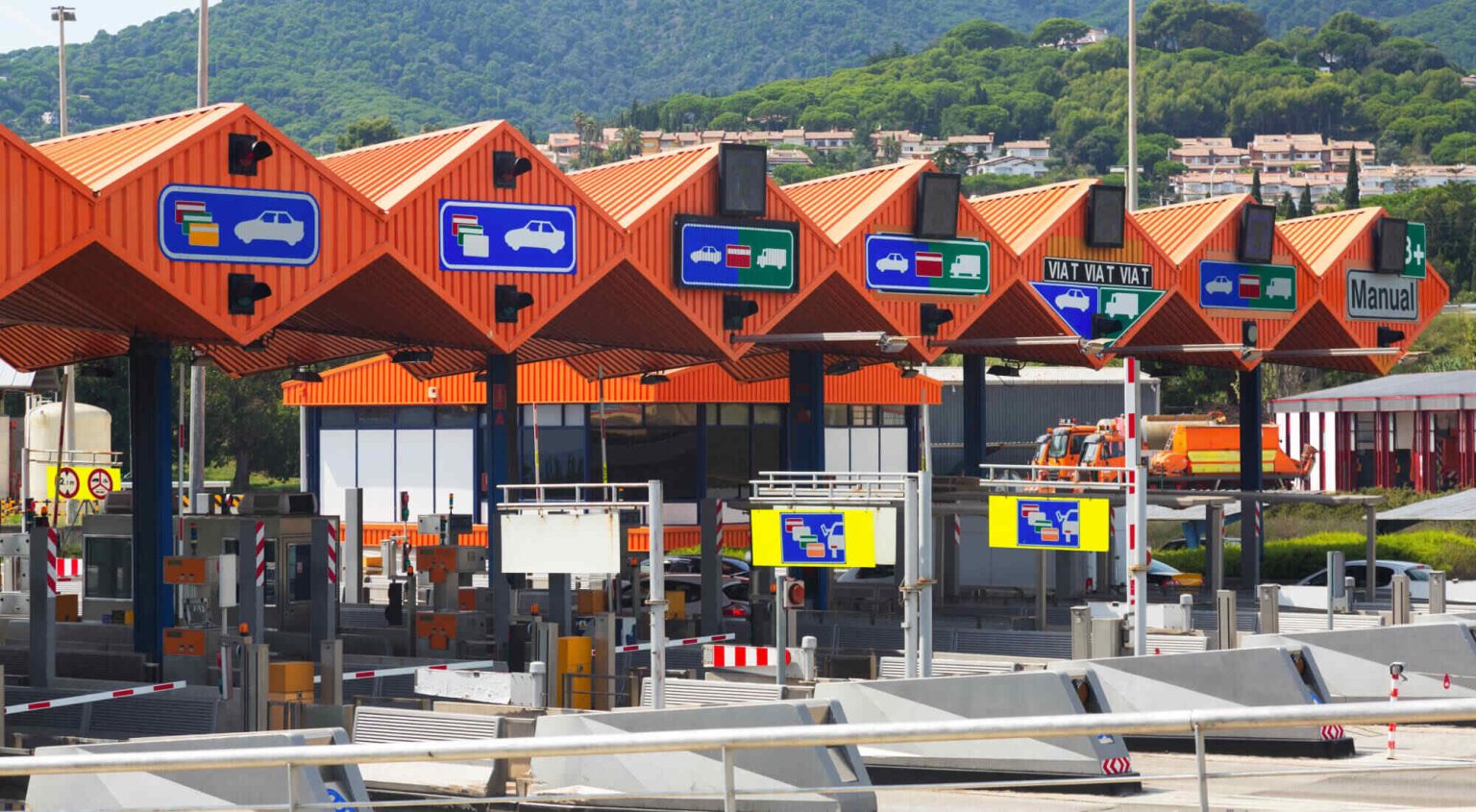
At the close of 2025, Spain announces a measure seemingly positive for drivers’ wallets: the removal of tolls on small sections of motorways with high traffic density. This gesture, however, clashes head-on with the macroeconomic reality affecting the infrastructure sector across Europe. While payment barriers are eliminated at very specific points – possibly due to their high media and social impact – the bulk of the toll motorway network is becoming consistently more expensive. This contradiction is not accidental; it is a symptom of a permanent tension between the need to finance the maintenance and construction of roads and the social and political pressure to alleviate transport costs.
The mechanism driving this general increase is largely automatic and linked to the evolution of the economy. As detailed in the provided information, the annual review formula, which takes into account variables such as the Consumer Price Index (CPI), will dictate an increase of 2.61% in tolls on major concessioned motorways for 2026. This increase will affect vital arteries such as the AP-7 on its Mediterranean stretches, the AP-6 (Madrid-La Coruña), or the AP-9 in Galicia, raising the operating costs for thousands of transport companies and travelers who depend on these fast roads.
The list of those affected by this increase is extensive and includes key concessions: AP-51, AP-61, AP-53, AP-66, AP-71, and AP-46, among others. To understand the impact, a truck that regularly travels the AP-7 between Málaga and Guadiaro, or a coach on the AP-9, will see its fixed expenses rise once again, adding to the increases of recent years. However, this 2.61% is not final; the Ministry of Transport has the final say, being able to modulate it—a political decision that will be under scrutiny.
Parallelly, there is another group of roads, the motorways “rescued” by the State and managed by SEITT – such as the R-2, R-3, R-4, R-5, AP-36, or AP-41 – which have had their prices frozen since 2019. For this group, a new regime has been established: from 2026 until 2032, they may apply maximum annual increases of 2%. This means the end of an exceptional period of low costs for users of these corridors, such as those connecting Madrid with Levante (AP-36) or the southwest (AP-41), and a return to a path of progressive price increases.
For the professional transport sector, especially international transport, this outlook is concerning. The removal of tolls on highly localized stretches – such as the one announced for the Alicante Bypass (AP-7) until February 2026 – marginally alleviates a cost that, overall, continues to grow. A transport operator travelling across Europe faces cumulative upward pressure on tolls in several countries, eroding the profitability of their operations. An exemption at one point does not compensate for the systematic increase across hundreds of kilometres of the core network.
In short, public communication focuses on immediate relief gestures, but the structural trend, driven by indexed formulas and the need to make concessions profitable, is clear: tolls are rising. Road professionals in Spain and Europe must prepare for a scenario of increasing infrastructure costs. The highlighted contradiction is not one; it is the coexistence of specific political measures with a firm economic reality: the price of using high-capacity motorways follows an upward trajectory, a problem that is consolidating on the horizon.
Have any thoughts?
Share your reaction or leave a quick response — we’d love to hear what you think!
-
 0
0
-
 0
0
-
 0
0
-
 0
0
-
 0
0
