
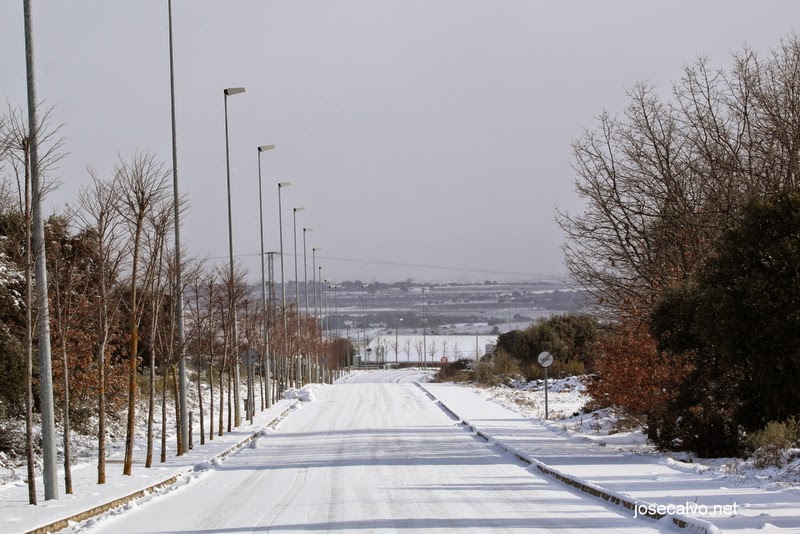
The weekend of December 20th and 21st, coinciding with the solstice that marks the beginning of winter, presents a widespread deterioration of weather conditions across much of Europe, creating a complex scenario for the transport sector.
While Spain faces the arrival of Atlantic fronts and a polar maritime cold air mass, northern and central Europe are already under the effects of a more active winter. This synoptic situation creates a cocktail of adversities forcing transporters to exercise extreme caution and constantly consult official warnings and road network status.
In Spain, Saturday the 20th stands out for instability. Precipitation will be widespread, more intense and persistent along the entire Cantabrian coast and the northwestern peninsula, where significant accumulations are expected.
The snow level will drop notably, around 800-1000 meters in the north, causing snowfall in the main mountain ranges like the Pyrenees, Cantabrian Mountains, and Central System, affecting key mountain passes for freight circulation.
Temperatures will experience a sharp drop, with widespread frost inland by Sunday dawn.
Sunday the 21st, the first official day of winter, will see the situation consolidate. Cold will be the undisputed protagonist, with highs in many inland provincial capitals not exceeding 5-7°C. Snowfall could be copious in mountain areas, extending to mid-level elevations in the north, and showers will persist in the Mediterranean and Balearic Islands. For transporters, critical points will be in northern passes (e.g., along the AP-8 or A-1), the Central System mountain passes, and inland secondary roads, where ice will be a latent risk in the early hours.
Beyond our borders, winter will show its most severe face in central and northern Europe. Especially severe conditions are forecast for countries like Germany, France, the Alps (Switzerland and Austria), and the Nordic countries, with heavy snow, blizzards, and temperatures well below zero. These conditions may cause traffic jams, sporadic highway closures, and severe circulation restrictions for trucks, especially in mountainous regions and crucial transport corridors like those crossing the Alpine massifs. The snowstorm could also complicate Channel ports.
Given this outlook, the recommendation for transport professionals is maximum prudence. It is essential to plan routes in advance, consult winter road services, equip vehicles with winter tires or chains, and carry an emergency kit with blankets, food, and water. This episode, which will extend into the first days of next week, confirms the definitive onset of winter in the midst of the Christmas campaign, a period of high logistical activity that will require constant adaptation to the whims of the weather.
Have any thoughts?
Share your reaction or leave a quick response — we’d love to hear what you think!
-
 0
0
-
 0
0
-
 0
0
-
 0
0
-
 0
0
