
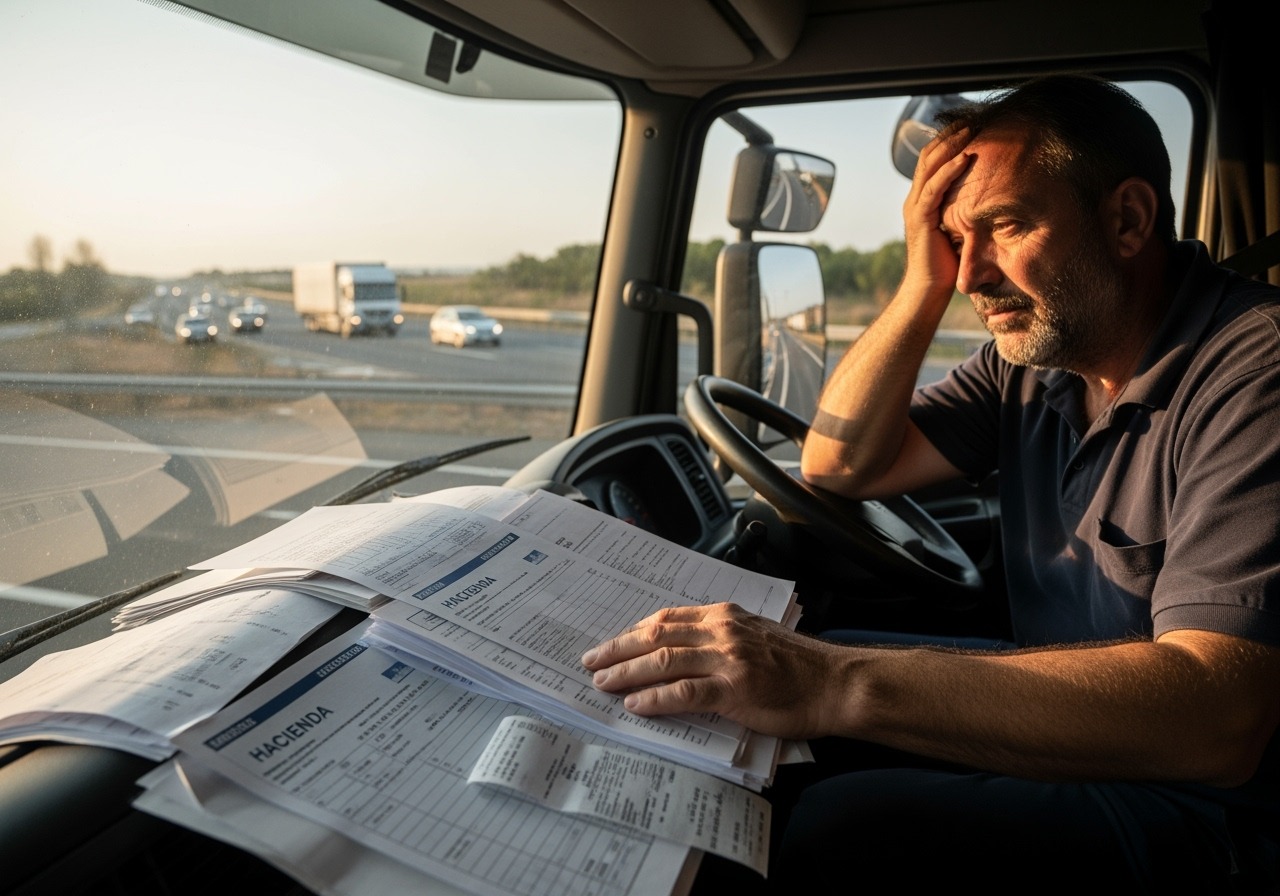
Driving a large truck is an activity that causes profound exhaustion, both physical and mental. The required concentration is constant, handling the vehicle demands considerable physical effort due to its size and weight, and the responsibility for the cargo and road safety is enormous. This wear and tear is accentuated under adverse conditions, such as during the winter months, when low outside temperatures, possible snow or ice on the road, and the visual monotony of long snowy highways increase driver tension and fatigue, drastically reducing alertness levels.
Studies on driving fatigue indicate that the risk of a traffic accident multiplies alarmingly after driving for more than 4-5 hours continuously without adequate rest. Drowsiness and loss of reflexes are direct consequences of accumulated tiredness, becoming one of the main causes of road accidents, especially on monotonous journeys like those characterizing many European routes. Therefore, professional driving cannot be governed solely by individual endurance, but by strict regulations.
In Spain, as in the entire European Union, the activity of professional goods and passenger drivers is regulated by Regulation (EC) 561/2006. This regulation sets maximum driving limits: no more than 9 hours daily (extendable to 10 two days a week), and a maximum of 56 hours weekly and 90 hours in two consecutive weeks. It also requires breaks of at least 45 minutes after every 4 hours and 30 minutes of driving, and daily rest periods of 11 hours (reducible to 9 three times between two weekly rests) and weekly rest.
The key tool for monitoring compliance with these rules is the tachograph. This device, mandatory in such vehicles, digitally records driving times, rest, availability, and other activities. The tachograph is not just a control instrument for authorities; it is essential for companies to plan realistic routes and, above all, for the driver themselves to manage their fatigue and have an objective record that forces them to stop, thereby protecting their health and that of all road users.
To combat fatigue, especially on the long and sometimes lonely European routes, road safety and occupational health specialists emphasize the importance of good planning and, when possible, the usefulness of driving with a companion. A travel companion not only helps break the monotony and maintain alertness through conversation but also allows for sharing tasks, making more effective stops, and supporting each other in situations of stress or extreme tiredness, such as those that can occur in a harsh winter. The combination of strict regulations, tachograph technology, and good work practices is the best defense against exhaustion at the wheel.
Have any thoughts?
Share your reaction or leave a quick response — we’d love to hear what you think!
-
 0
0
-
 0
0
-
 0
0
-
 0
0
-
 0
0
