
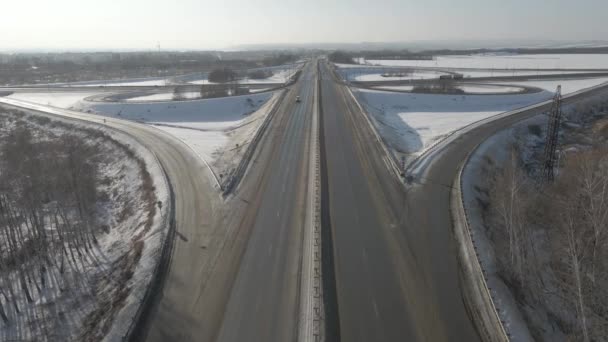
Italian winter presents a landscape of stark contrasts. While the north, anchored in the Alps and the Po Valley, faces persistent snow, dense fog, and frequent frosts, the south and coasts enjoy a milder climate, though with torrential rains and winds like the scirocco. This climatic duality directly impacts the road network. The toll highways (autostrade), generally well-maintained, can become treacherous on mountain passes and summits, such as the Brenner Pass or the Apennines, where snow and ice are common. State and provincial roads, vital for local access, present greater risks: narrower lanes, sharp curves, and less immediate maintenance. Prudence and adequate equipment, like chains or winter tires (mandatory in certain periods and regions), cease to be a recommendation and become a safety requirement.
Italian geography, a long and narrow peninsula crossed by the Apennine mountain chain, dictates the pace of transport. Traveling the country from north to south, for example from Milan to Reggio Calabria, means facing between 1,200 and 1,400 kilometers of route, much of it snaking through mountains or skirting coasts. Freight carriers overcome this orographic challenge through meticulous logistics. The backbone of heavy traffic is the A1 motorway, the “tunnel” connecting Milan to Naples, and the A14 running along the Adriatic coast. Planning avoids, whenever possible, crossing the mountainous heart of the Apennines via secondary roads. The choice between the Tyrrhenian (west) or Adriatic (east) route depends on the final destination and real-time weather conditions, closely monitored.
Professionals in the sector not only battle geography but also operate under a strict and particular regulatory framework. Italy is at the forefront of transport regulation in Europe. Notable are the mandatory use of the Viacard or Telepass device for electronic toll payment on motorways, draconian restrictions on truck circulation on Sundays and holidays (total block typically from 7:00 to 22:00), and the proliferation of Limited Traffic Zones (ZTL) in historic urban centers, whose inadvertent entry carries hefty fines. Furthermore, the transport of dangerous or exceptional goods requires specific authorizations and often the use of predefined routes and schedules. Knowing these rules is not optional; it is the key to a successful operation without administrative setbacks.
To bring products from the industrialized north to the consumer south, carriers combine resilience and technology. In winter, convoys are equipped with temperature monitoring systems for sensitive cargo and are planned with generous time margins for possible mountain pass closures. Constant communication with control centers and the use of real-time traffic apps are essential tools. Many companies opt for the rail mode for the Alpine section, loading semi-trailers onto trains through Switzerland or Austria, thus avoiding the most critical passes. This intermodality is a pragmatic response to the combination of geography and ecology.
In conclusion, operating in Italy during winter requires more than a good vehicle; it demands preparation, knowledge, and adaptation. The foreign carrier must study the routes, scrupulously respect circulation hours, equip for snow, and, above all, internalize that the law is applied rigorously. The reward is access to a vital and diverse market, whose challenges, once understood and overcome, transform into the satisfaction of a mission accomplished between sublime landscapes and the demanding precision of Mediterranean logistics.
Have any thoughts?
Share your reaction or leave a quick response — we’d love to hear what you think!
-
 0
0
-
 0
0
-
 0
0
-
 0
0
-
 0
0
