
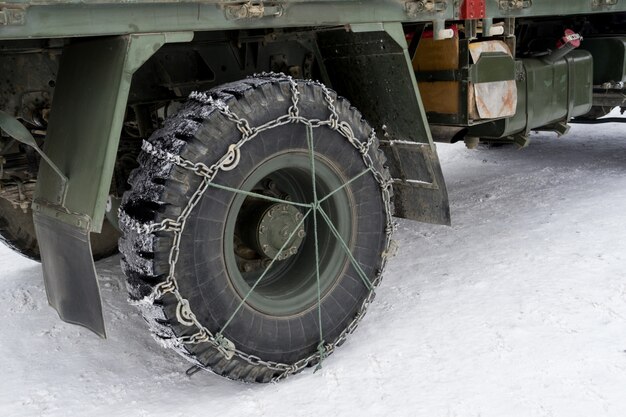
In the Spanish winter, when temperatures drop and roads become treacherous, the quality of tires in heavy transport ceases to be a simple mechanical component and becomes a critical pillar of road safety and logistical efficiency. Having a well-equipped fleet is not an option but a corporate responsibility and a legal requirement. The Directorate-General for Traffic (DGT) regularly emphasizes, especially during its winter campaigns, that the condition of tires is the most important passive safety factor, directly responsible for traction, braking, and stability. For trucks transporting goods across Europe, from the humid ports of the Cantabrian Sea to the dry, cold high plains of the Spanish Plateau, this adaptation is vital to avoid accidents that could paralyze essential corridors.
The measures and recommendations of the DGT and European bodies are clear. They stress thorough verification of tread depth (a minimum legal depth of 4 mm in winter is highly recommended for greater safety, compared to the 1.6 mm legal minimum), correct tire pressure—which varies with temperature—and the suitability of the tire for conditions. While there is no general obligation to use winter tires or those marked M+S (Mud+Snow) in Spain, their use is essential on many mountain roads where signage requires them or the use of chains. The DGT promotes winter tires for their technical superiority and continuous safety once the thermometer reads +7°C, as indicated by technical studies. For carriers, care must be methodical: daily visual inspections, weekly cold-pressure checks, and route planning that considers weather alerts from the State Meteorological Agency (AEMET).
The advantages of investing in high-end winter or “All Season” tire technology for heavy fleets are compelling. They maximize safety by drastically reducing braking distances on cold, wet, and snowy surfaces, protecting cargo, the driver, and other road users. They improve punctuality and efficiency by minimizing the risk of immobilization due to adverse conditions—a crucial economic factor in just-in-time logistics. They reduce uneven wear during the cold season, as they are made with specific compounds that do not harden, potentially extending their lifespan in the appropriate context.
However, there are drawbacks and logistical challenges. The initial cost is significantly higher, both in acquisition and storage of two sets of tires (summer/winter). Operational management becomes more complex, requiring scheduled changes at times that vary by geographic region (approximately November to March), demanding precise fleet planning. Additionally, on long European journeys, a truck may face multiple conditions, from heavy rain in France to snow in the Alps, raising a dilemma about the optimal solution.
The need to be well-equipped technologically is undeniable. The shift toward next-generation “All Season” tires for heavy vehicles is gaining ground, offering an acceptable compromise for regions with moderate winters like much of Spain. However, for high-mountain routes or Northern European countries, winter tires with the alpine symbol (3PMSF) are the only safe and often legally required option. Technology in sipes and silica compounds has advanced to offer durability without sacrificing grip.
In conclusion, equipping heavy vehicles with winter-appropriate tires is a strategic decision that goes beyond mere maintenance. It is an essential component of road safety, supply chain resilience, and the corporate social responsibility of the transport sector. The balance between additional cost and benefits in safety, efficiency, and regulatory compliance clearly leans toward investing in appropriate technology. In an unpredictable European winter, where a single accident can have incalculable human and logistical costs, the only thing that should skid is improvisation.
Have any thoughts?
Share your reaction or leave a quick response — we’d love to hear what you think!
-
 0
0
-
 0
0
-
 0
0
-
 0
0
-
 0
0
