
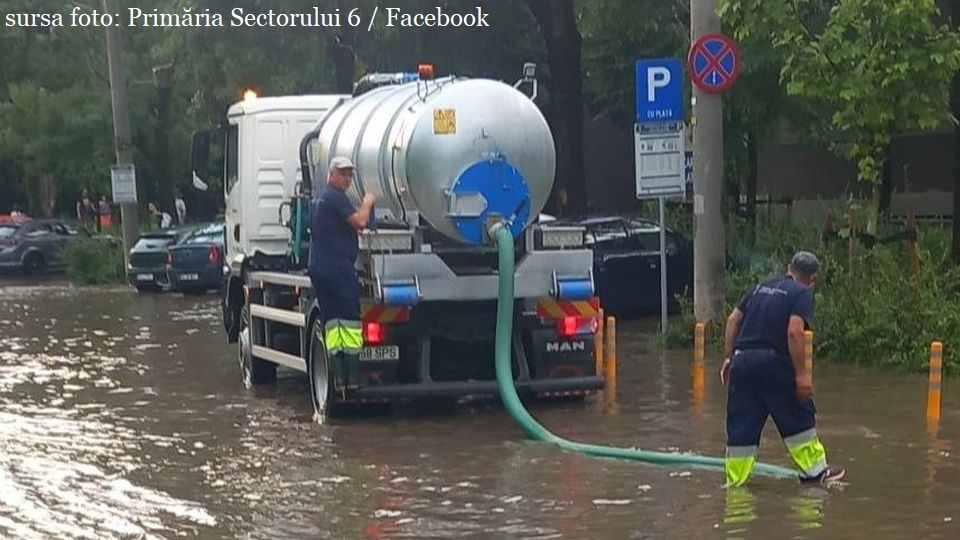
Climate change has ceased to be an abstract threat and has become a concrete drag on the Romanian economy, and its impact on freight transport is increasingly severe. The country’s logistics corridors, vital for its connection with Europe, are periodically strangled by extreme weather events. Floods that wash away sections of roads and railways, prolonged droughts that lower the Danube to critical levels, and snowstorms that block mountain passes are no longer anomalies, but the new normal, challenging the resilience of infrastructure and logistical planning.
The Danube, a crucial inland waterway for the transport of grains, minerals, and fuels to the Black Sea and beyond, has become a thermometer of the problem. Successive heatwaves and lack of precipitation have caused historic drops in its flow. When the water level falls, cargo ships cannot sail at full capacity, forcing a drastic reduction in the tonnage transported. This means more trips to move the same amount of goods, resulting in increased costs, delivery delays, and a loss of competitiveness for Romanian exporters.
By land, the situation is no better. The road network, already suffering from maintenance deficiencies, is battered by torrential rains that cause floods and landslides, isolating localities and cutting off trade routes. On the other hand, the high temperatures recorded in summers soften the asphalt, increasing the risk of accidents and damaging the road surface more quickly. In winter, the abrupt thaw following heavy snowfalls in the Carpathians saturates the ground and accelerates the appearance of potholes and cracks, increasing maintenance costs for the truck fleet and transport times.
The railway, a fundamental pillar for bulk cargo transport, is not immune either. Tracks warp under extreme heat, forcing trains to reduce speed to avoid derailments. At the same time, the increased frequency of violent storms damages signaling and electrification systems. The combination of these factors generates a chain of inefficiencies that translates into a loss of reliability. For companies, a delay of hours or days in receiving raw materials or delivering finished products can mean million-dollar losses and the breach of international contracts.
This vulnerability highlights a stark paradox: Romania, a breadbasket of Europe, sees its capacity to export its own resources compromised. The intermittency of transport corridors discourages investment and threatens to economically isolate entire regions. Adaptation is not just an environmental issue, but one of national and economic security. The modernization of ports, the reinforcement of railway embankments, and the construction of more resilient roads are urgent investments to avoid being disconnected from global supply chains.
In conclusion, climate change acts as a multiplier of the structural weaknesses of Romanian transport. The freight sector, the backbone of the economy, navigates an increasingly unpredictable and hostile environment. Without an ambitious national strategy that prioritizes the adaptation of infrastructure, Romania risks having its commercial arteries frequently blocked, mortgaging its economic future on an overheating planet. Logistical efficiency is now also a matter of survival.
Have any thoughts?
Share your reaction or leave a quick response — we’d love to hear what you think!
-
 0
0
-
 0
0
-
 0
0
-
 0
0
-
 0
0
