
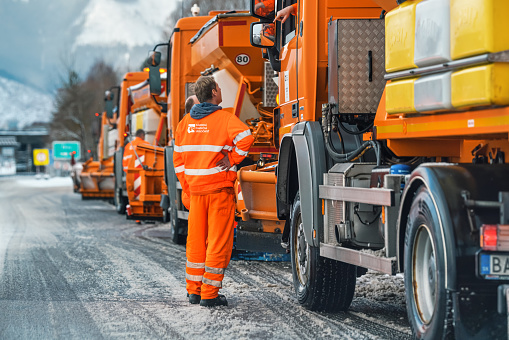
Winter is not just another season for heavy vehicle drivers; it is a constant challenge that tests their skill and preparation. After reviewing the experiences of 2023 and 2024, a pattern emerges with unsettling clarity. The most recurring issue, particularly severe, was the formation of ice and intense snowfall in mountain ranges and plateaus—phenomena that not only delayed cargo but also posed serious risks to road safety. The common denominator of this issue goes beyond meteorology: it is the convergence of extreme weather events with known critical points in the road network and, at times, inflexible logistics.
The General Directorate of Road Transport, through its channels, is emphatic on this matter. It insists on the mandatory inspection of vehicles before the winter season, emphasizing tires, brakes, batteries, and lighting systems. Additionally, it publishes specific guides detailing the mandatory equipment of chains or winter tires when driving on marked sections and reminds drivers of the importance of checking road conditions through the DGT before starting any route. According to the public body, preparation is the first line of defense.
When comparing these recommendations with the reality of the last two winters, a gap becomes evident. In industry forums, opinions are divided. On one hand, there are those who defend the individual responsibility of the professional. An anonymous driver in a logistics forum commented: “The DGT warns, the weather warns… In the end, driving up a mountain pass with below-freezing temperatures without chains is like playing Russian roulette. The rush to deliver cannot come before our lives.” This stance emphasizes that the pressure of delivery deadlines often leads to calculated risks.
In contrast, another opinion points to deeper structural problems. Another carrier argued on social media: “It’s very easy to blame the driver. What about the overcrowded emergency parking areas? What about the lack of foresight in closing mountain passes? They send us into the wolf’s den with impossible schedules, and then the DGT lectures us. More support measures are needed, not just recommendations.” This criticism highlights the lack of sufficient infrastructure to handle massive traffic stoppages and the disconnect between logistical planning and weather realities.
The synthesis of these two years of winter problems reveals that the true common denominator is a vicious cycle where operational pressure clashes with climate unpredictability in high-risk areas. Regions such as Aragón, Castilla y León, and Catalonia, with their mountain passes and long stretches of plateaus exposed to fog and ice, are confirmed as the most dangerous territories. The solution does not solely depend on every truck driver carrying chains but on smarter, more preventive coordination among companies, authorities, and the drivers themselves.
In conclusion, the winters of 2023 and 2024 have served as a stark reminder of a systemic vulnerability. While the General Directorate of Road Transport emphasizes individual preparation—undoubtedly crucial—the industry calls for a more comprehensive approach that includes more detailed alerts, adequate infrastructure, and a logistics culture that does not penalize safety stops. Until this problem is addressed holistically, heavy transport will continue to fight a battle every winter whose casualties, sadly, seem predictable.
Have any thoughts?
Share your reaction or leave a quick response — we’d love to hear what you think!
-
 0
0
-
 0
0
-
 0
0
-
 0
0
-
 0
0
