
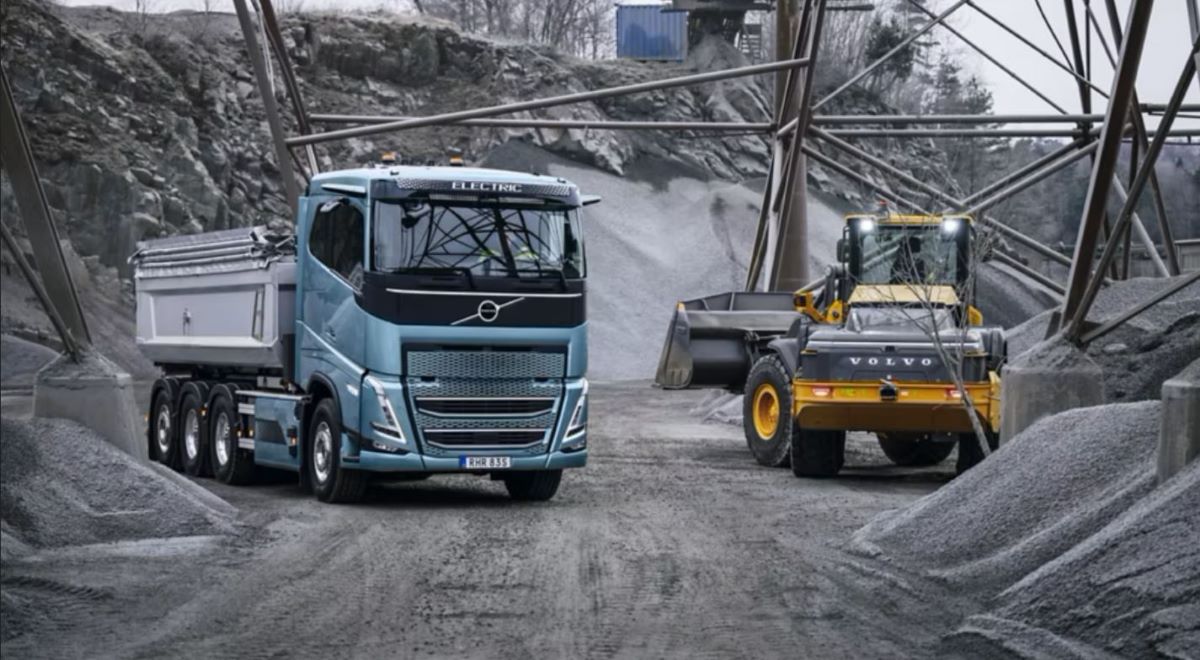
Germany has not only set ambitious goals to decarbonize freight transport but is already showcasing tangible progress that marks a turning point in its green transition. By 2025, the country has successfully integrated fleets of electric trucks into key logistics corridors, driven by a combination of public investment, private innovation, and regulations that prioritize sustainability. Projects like the eHighways in Schleswig-Holstein and Hessen, although in the pilot phase, have demonstrated the feasibility of powering hybrid trucks via overhead lines, reducing emissions on high-traffic routes.
One of the most notable milestones is the operational use of hydrogen trucks for long distances, a key solution for routes where direct electrification is complex. Companies like Daimler Truck and Volkswagen have deployed fuel cell units in collaboration with logistics consortia, backed by a nascent network of green hydrogen stations. “By this 2025, Germany has laid the groundwork for a dual ecosystem: batteries for urban and regional distribution, and hydrogen for long-distance transport,” explains Dr. Anja Schmidt, a researcher at the Institute for Sustainable Mobility in Munich.
Experts agree that this progress would not be possible without the commitment of the public sector. The German government has allocated more than 4 billion euros in subsidies for charging infrastructure and fleet renewal, in addition to implementing a differentiated toll system that penalizes CO₂ emissions. “The German strategy is an example of how environmental policy can align with industrial competitiveness. Clean transport is no longer a cost, but an advantage,” says Klaus Weber, an analyst at the German Center for Energy and Transport.
However, challenges remain. Some experts, like Professor Franz Bauer from the Technical University of Berlin, warn of the need to accelerate the expansion of infrastructure: “Although the prototypes and pilot projects are successful, scalability requires an ultra-fast charging network and solutions for the limited capacity of the power grid. Without this, the risk of bottlenecks is real.”
Despite this, the balance is positive. Logistics companies like DB Schenker and Rhenus already report reductions of up to 50% in emissions in their land operations thanks to the transition to electric and hydrogen vehicles. “Germany is demonstrating that the decarbonization of freight transport is technically and economically viable. What has been achieved in 2025 is not a test, but the first phase of an irreversible transformation,” concludes Schmidt.
The path to 2030, when the EU will ban the sale of new combustion-engine trucks, looks clearer. Germany, with its technological mix and pragmatic approach, is establishing itself as a global laboratory for solutions that could be replicated in other industrialized countries. The clean transport revolution already bears a German stamp.
Have any thoughts?
Share your reaction or leave a quick response — we’d love to hear what you think!
-
 0
0
-
 0
0
-
 0
0
-
 0
0
-
 0
0
