
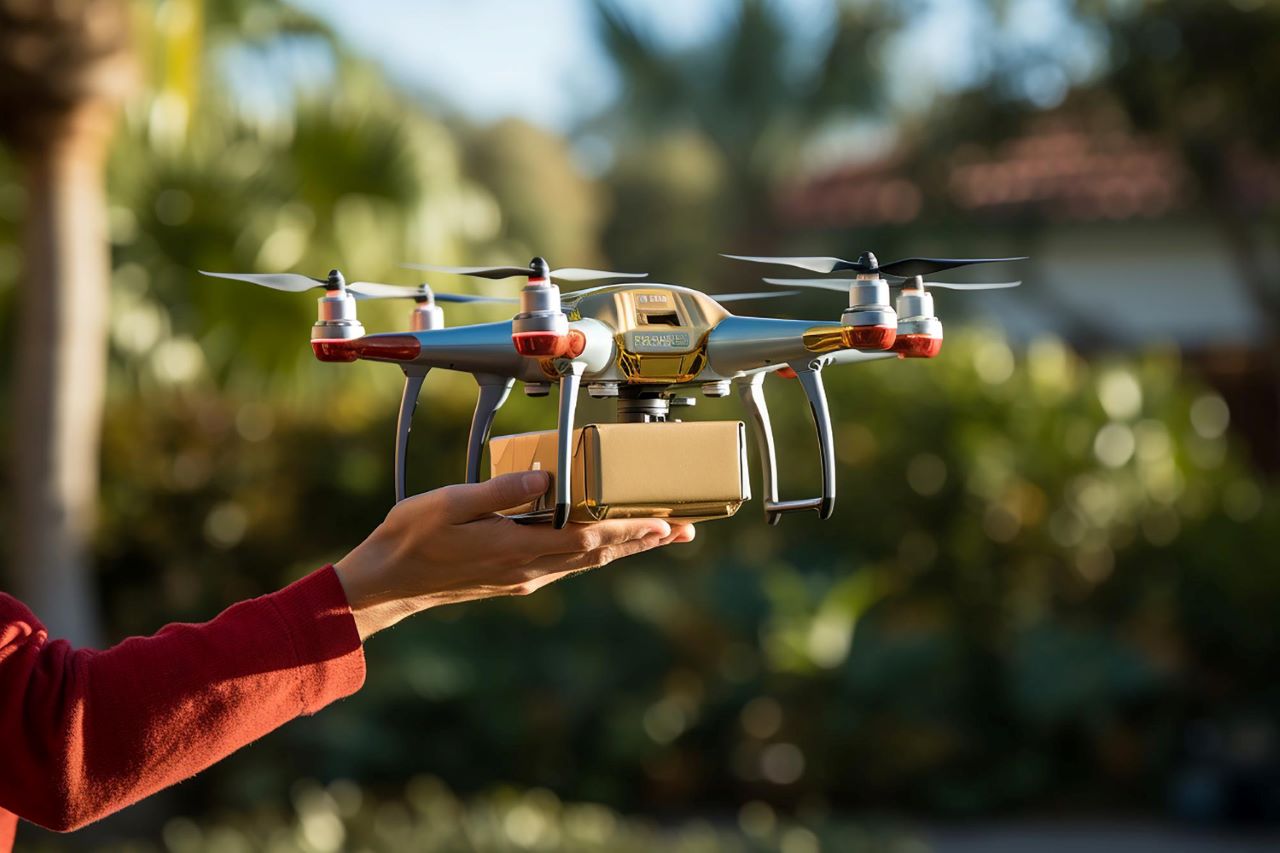
The year 2025 has confirmed what many had predicted: drones have ceased to be a technological toy to become a backbone of efficiency in Spain. It is no longer strange to see these unmanned aircraft crisscrossing the skies, performing tasks ranging from crop monitoring to the delivery of urgent medicines.
Implementation is advancing at full speed, driven by a European Union regulatory framework that, while strict, has managed to standardize and secure operations. Spain, with its geographical diversity and its powerful logistics and agricultural sector, has emerged as an ideal testing ground for this quiet revolution.
Who is leading the deployment? Far from being a monopoly, the development is a vibrant ecosystem. Companies like Correos, in collaboration with technology providers, have perfected delivery routes in semi-urban environments.
On the agricultural front, cooperatives and large agribusiness holdings use drones for hyper-detailed analysis of their fields, applying water and pesticides with millimeter precision.
For their part, major logistics firms, such as Amazon or DHL, have established automated distribution hubs in strategic areas, while Spanish startups specializing in niche sectors, such as energy infrastructure inspection or coastal surveillance, are emerging strongly.
The perspective of trade specialists is one of cautious optimism. They see drones as a powerful tool to reduce the “last kilometers,” the most costly leg of any shipment, which could lower costs and improve the customer experience. However, they warn of challenges: airspace congestion in cities, the need for a network of control centers, and the still high initial investment are hurdles that require collaborative solutions between the public and private sectors.
From the academic and technological sphere, the view is bolder. Scholars talk not only of deliveries but of “intelligent swarms” of drones coordinated via 5G and artificial intelligence for firefighting or search and rescue tasks. They are researching lighter materials and longer-lasting batteries, pointing out that the true revolution will come when drones are completely autonomous and capable of interacting with each other and with the environment, a horizon already glimpsed in pilot projects.
For their part, business owners, especially SMEs and the self-employed, show a pragmatic stance. Those who have taken the step, such as wineries offering virtual tours with drones or construction companies monitoring worksites, praise the time savings and the extremely high-quality data obtained. However, a significant portion still perceives the technology as complex and expensive and demands more aid and training to catch a wave that, it is clear, will only continue to grow.
In short, the Spanish landscape in 2025 is that of an open-air laboratory. Drones have ceased to be the future to become a present full of opportunities and challenges.
Their buzz is already the soundtrack of a transformation that promises to redefine everything from how we receive a package to how we protect our forests. The sky is no longer the limit, but the new playing field.
Have any thoughts?
Share your reaction or leave a quick response — we’d love to hear what you think!
-
 0
0
-
 0
0
-
 0
0
-
 0
0
-
 0
0
