
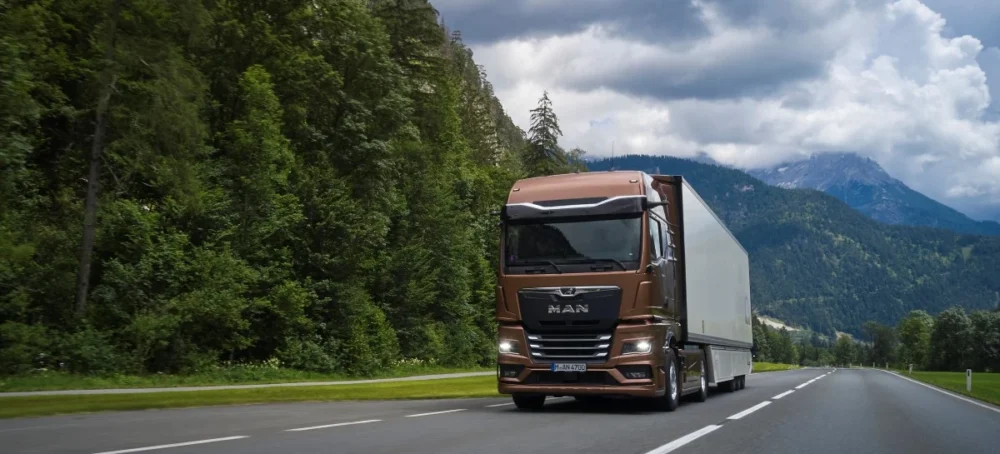
According to a recent analysis by the specialized magazine Digital Transporte 3, competitiveness in the road freight transport sector in Spain is played out on a field of extremely tight margins, where the average profitability of companies fluctuates between 2% and 4%. In this context, as the publication rightly points out, there is no room for magic formulas, and the viability of companies depends on meticulous cost management. The battle for efficiency is fought in the details, and it is there that the choice of vehicle becomes a strategic decision of the first order.
The Digital Transporte 3 article focuses on a crucial data point from the Ministry of Transport’s Cost Observatory: expenses for fuel and personnel represent over 60% of the Total Cost of Ownership (TCO) of a truck. Given that the wage bill has limited room for optimization, due to the need to retain a qualified workforce in a market with a driver shortage, the publication indicates that fuel becomes the main battlefield for gaining competitiveness.
In this scenario, the magazine emphasizes that choosing the right truck makes the difference. While the price of diesel is beyond the control of companies, selecting an efficient vehicle with a configuration adapted to their operations is a decision that is in their hands. The outlet illustrates this point with a compelling calculation: in a sector where a truck travels an average of 110,000 km per year, a reduction of just one liter per 100 km translates into savings of nearly 1,500 euros annually per unit.
To support this thesis, Digital Transporte 3 relies on its practical test of the MAN TGX with the new D30 engine, a model that, according to their tests, achieved an average consumption of 24.71 l/100 km. The publication attributes this performance to the manufacturer’s technical innovations, such as the XPI injection system, dynamic torque management, and aerodynamic improvements, which together form the PowerLion drivetrain and allow fuel savings of up to 5%.
In conclusion, the Digital Transporte 3 report leaves a clear message: in a sector with minimal margins, any adjustment in the major cost items is vital. Choosing a modern and efficient truck, exemplified in their analysis by the MAN TGX D30, ceases to be a mere option and becomes a decisive investment. That incremental improvement in consumption can literally be the factor that determines the continuity or closure of a transport company in today’s Spain.
Have any thoughts?
Share your reaction or leave a quick response — we’d love to hear what you think!
-
 0
0
-
 0
0
-
 0
0
-
 0
0
-
 0
0
